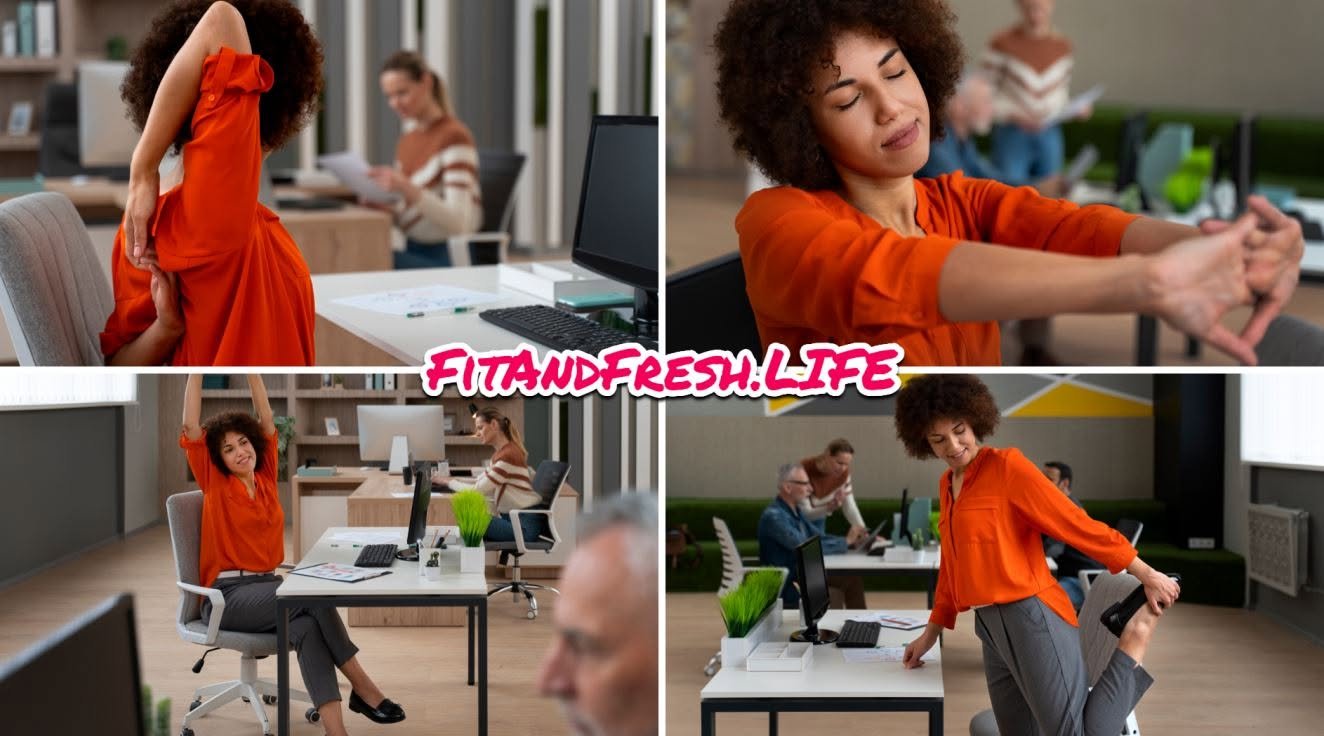
A busy workday can make it easy to spend hours sitting in the same position. By the end of the day, you may notice stiff shoulders, tight hips, tired legs, or simply feel like you have barely moved at all. The good news is that you don't need a gym or a long workout to add more movement to your day. A few simple exercises at or near your desk can help break up long periods of sitting and keep your body moving.
1. Seated Leg Extensions
What it works: Your thighs and the muscles around your knees.
How to do it: Sit upright in your chair with your feet on the floor. Slowly extend one leg forward until it is comfortable and nearly straight, pause briefly, then lower it back down. Repeat with the other leg.
Try: 8 to 12 repetitions on each side, depending on your comfort level.
2. Seated Marching
What it works: Your hips and legs while adding gentle movement to your lower body.
How to do it: Sit tall and slowly lift one knee a few inches, lower it, and then lift the other knee. Continue alternating as if you are marching while sitting down.
Try: Continue for 30 to 60 seconds at a comfortable pace.
3. Shoulder Rolls
What it helps: This movement can help relieve the feeling of stiffness around your shoulders after sitting for a long time.
How to do it: Sit or stand tall. Slowly roll your shoulders upward, backward, and down in a smooth circular motion. After several repetitions, change direction.
Try: 8 to 10 slow circles in each direction.
4. Calf Raises at Your Desk
What it works: Your calf muscles and lower legs.
How to do it: Stand behind your chair or desk and use it for light support if needed. Slowly raise your heels so you are standing on the balls of your feet, then lower them back down with control.
Try: 10 to 15 repetitions.
5. Desk Push-Ups
What it works: Your chest, shoulders, and arms.
How to do it: Stand facing a sturdy desk or stable surface. Place your hands on the edge, step your feet back slightly, and slowly bend your elbows to bring your chest toward the desk. Push yourself back to the starting position.
Try: Start with 5 to 10 repetitions and adjust based on your fitness level.
6. Seated Core Tightening
What it works: The muscles around your midsection.
How to do it: Sit upright with your feet supported on the floor. Gently tighten your abdominal muscles as if you are preparing for a light cough, hold for a few seconds while breathing normally, then relax.
Try: Hold for 5 seconds and repeat several times throughout the day.
7. Stand Up and Walk for Two Minutes
What it helps: Sometimes the simplest movement is the most practical. Standing up and walking around can break up long periods of sitting and give your body a change of position.
How to do it: Walk to refill your water, visit a coworker instead of sending a message, or simply take a short lap around your workspace.
A Quick 5-Minute Desk Movement Break
- 1 minute: Seated marching
- 30 seconds: Shoulder rolls
- 1 minute: Calf raises
- 1 minute: Desk push-ups
- 1.5 minutes: Walk around your workspace
You don't have to complete this routine perfectly. The goal is simply to add more movement to a day that might otherwise involve long periods of sitting.
How to Make Movement a Workday Habit
- Set a reminder to stand up regularly.
- Keep your movements simple enough to do without changing clothes.
- Use short breaks instead of waiting for one long workout.
- Walk during phone calls when possible.
- Listen to your body and avoid movements that cause pain.
Final Thoughts
Staying active at work doesn't require turning your office into a gym. Small movements throughout the day can be easier to fit into a busy schedule and may help you avoid staying in the same position for hours. Start with one or two exercises that feel comfortable, then gradually make movement a regular part of your workday.
Note: This article provides general fitness information. Stop any exercise that causes pain or discomfort, and speak with a qualified healthcare professional before starting a new exercise routine if you have an injury, medical condition, or other health concerns.