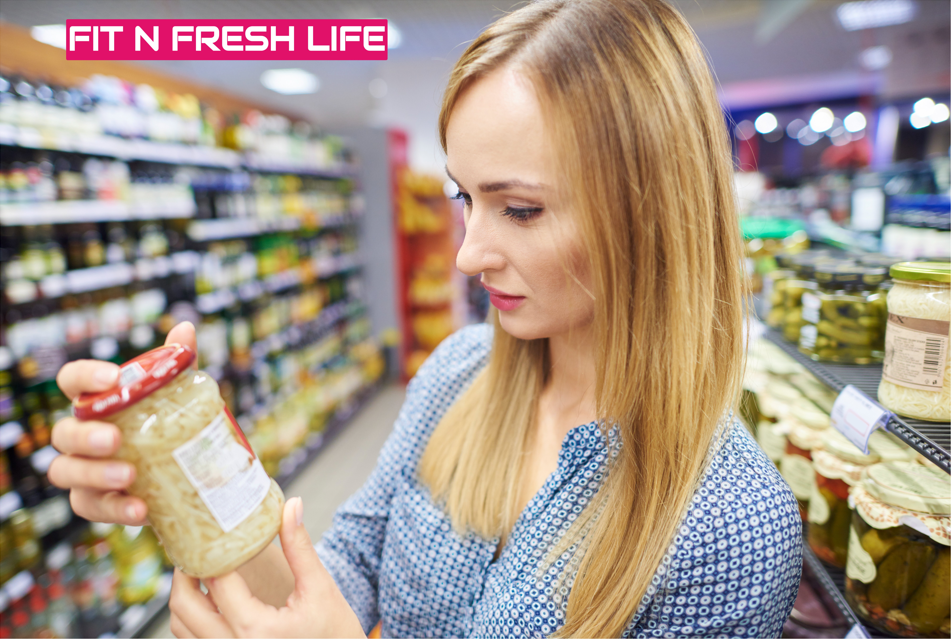
Walk through almost any supermarket and you will see food packages making promises about how healthy they are.
High protein. Natural. Light. Multigrain. No added sugar. Fat-free. Made with whole grains. Gluten-free.
Those words can make a product sound healthier before you have even looked at what is actually inside the package.
That doesn't necessarily mean the manufacturer is lying. Many claims have specific meanings, and some products genuinely are better choices than others. The problem is that the front of the package is designed primarily to attract your attention, while the nutrition panel and ingredient list give you a much better picture of what you are actually buying.
Learning to read a food label doesn't mean becoming obsessed with every number. It means knowing which numbers deserve your attention and which marketing messages you can put into perspective.
Once you understand a few basic tricks, grocery shopping becomes much easier.
Start With the Serving Size — Before Looking at Calories
One of the easiest ways to misunderstand a nutrition label is to look at the calorie number without checking the serving size first.
On many nutrition labels, the listed nutrition information applies to one serving, not necessarily the entire package.
Imagine you pick up a snack that says it contains 150 calories. That sounds fairly modest. But then you notice the package contains three servings.
If you eat the entire package, you have consumed 450 calories rather than 150.
The same applies to sugar, sodium, fat, protein and every other nutrient listed on the panel.
The U.S. Food and Drug Administration recommends starting with the serving information because the nutrition numbers are generally based on that serving. The serving size is intended to reflect typical consumption rather than necessarily being a recommendation for how much you should eat.
This is particularly important with foods that look like individual portions but technically contain multiple servings.
A small bag of crackers, a bottle of a sweetened drink, a tub of ice cream or a package of cookies may contain more than one serving.
Before judging the product, ask one simple question: "How much of this am I actually going to eat?"
Calories Matter, But They Don't Tell the Whole Story
Calories are useful information. They tell you how much energy a serving provides.
But calories alone cannot tell you whether one food is a better choice than another.
For example, two snacks could contain roughly the same number of calories while being very different in protein, fiber, added sugar, sodium and overall nutritional value.
A calorie number should therefore be treated as one piece of information rather than a complete health score.
This becomes especially important when comparing foods that are marketed as "healthy."
A granola bar, smoothie, breakfast cereal or flavored yogurt may have a health-focused appearance while still contributing a substantial amount of added sugar or relatively little protein and fiber.
The better question is not simply:
"How many calories does this have?"
Instead ask:
"What am I getting for those calories?"
Total Sugar and Added Sugar Are Not the Same Thing
The word sugar can create confusion because not all sugar on a nutrition label comes from the same source.
Total sugars can include sugars that naturally occur in foods as well as sugars added during processing.
For example, plain milk contains naturally occurring lactose, while a sweetened yogurt can contain both naturally occurring sugar and added sugar.
On U.S. Nutrition Facts labels, added sugars are listed separately from total sugars. The FDA explains that added sugars include sugars and certain sweetening ingredients added during processing, while naturally occurring sugars in foods such as fruit and milk are not counted as added sugars.
This distinction can completely change how you interpret a product.
Suppose a yogurt contains 15 grams of total sugar. That number alone doesn't tell you how much came naturally from the milk and how much was added to sweeten the product.
If the label shows 7 grams of added sugar, you have much more useful information.
And remember that "no added sugar" does not necessarily mean "no sugar."
A product can contain naturally occurring sugars or ingredients such as fruit juice concentrate while still having no conventional sugar added during manufacturing, depending on the product and labeling rules.
For everyday shopping, the important lesson is simple: don't stop at the word "sugar." Look at the actual numbers and understand what they represent.
Don't Let "No Added Sugar" Create a Health Halo
This is one of the most common marketing traps.
A package may proudly say "No Added Sugar", and that can make you assume the entire product is automatically a healthy choice.
But removing added sugar doesn't automatically make a food low in calories, high in fiber, high in protein or low in sodium.
Consider a drink made primarily from fruit ingredients. It might have no added sugar but still contain a meaningful amount of naturally occurring or free sugars, depending on how it is made.
WHO guidance recommends limiting free sugars and notes that sugars naturally present in fruit juice and concentrates are included in the definition of free sugars.
So instead of allowing one positive claim to make the entire decision for you, look at the whole label.
Protein Claims Need Context
"High protein" has become one of the biggest food marketing phrases in recent years.
Protein is an important nutrient, but seeing the words high protein on the front of a package doesn't tell you everything you need to know.
Check the actual grams of protein per serving.
Then consider how large the serving is and what else comes with it.
A snack containing 10 grams of protein might be useful in one situation, while another product containing 15 grams may not be particularly impressive if the serving is very large or contains a substantial amount of added sugar and saturated fat.
The same principle applies to protein drinks, cereals, bars, cookies and desserts.
Don't buy the phrase. Check the number.
Fiber Is Another Number Worth Checking
Fiber is often highlighted on packaging because many people don't consume enough of it.
But once again, the front of the package isn't enough.
If a product says "with fiber," check the actual grams listed in the nutrition panel.
A product with only a small amount of fiber may technically contain fiber without being an especially rich source.
WHO recommends that adults and children over age 10 aim for at least 25 grams of naturally occurring dietary fiber per day, while individual needs can vary.
Fiber can also make a food more filling, particularly when it comes from foods such as whole grains, vegetables, fruits, pulses, nuts and seeds.
That doesn't mean packaged high-fiber products are automatically bad. It simply means the number on the label is more useful than the marketing phrase on the front.
Learn to Read the Ingredient List
The ingredient list can look intimidating, especially when a product contains ingredients you don't recognize.
But you don't need a chemistry degree to use it.
One useful thing to remember is that ingredients are generally listed in descending order by weight under U.S. labeling rules.
That means the ingredients appearing near the beginning make up more of the product than those appearing later in the list.
This can tell you a lot.
If a breakfast product presents itself as a whole-grain food but refined flour or another ingredient appears prominently near the beginning of the list, the front-of-package imagery may not tell the complete story.
Likewise, if a flavored snack appears to be fruit-based but a sweetening ingredient is near the beginning of the ingredient list, that is worth noticing.
However, don't make the opposite mistake and assume that a long ingredient list automatically means a food is unhealthy.
Some nutritious or perfectly reasonable packaged foods can contain several ingredients. An ingredient you cannot pronounce isn't automatically dangerous, just as an ingredient with a familiar name isn't automatically nutritious.
Look at the overall product rather than judging it from one word.
"Multigrain" Doesn't Automatically Mean Whole Grain
This is a classic example of how marketing language can influence perception.
The word multigrain simply tells you that multiple grains are used. It does not automatically mean the grains are whole grains.
A product can contain several different refined grains and still be called multigrain.
If whole grains are what you are looking for, check the ingredient list and the product's nutrition information rather than relying on the word "multigrain" alone.
Similarly, brown-colored bread isn't necessarily whole-grain bread. Color, seeds and pictures of wheat on the package are not substitutes for reading the label.
"Light" Can Mean Different Things
The word light sounds automatically positive, but you need to understand what has actually been reduced.
A product might be lower in fat, calories or another characteristic compared with a standard version.
That doesn't necessarily mean it is low in everything you care about.
A "light" product can still contain significant amounts of sodium or added sugar, depending on the food.
Whenever you see words such as light, reduced, lower, or less, ask:
"Lower than what?"
That one question puts the claim into context.
Fat-Free Doesn't Mean You Should Automatically Buy It
Fat has sometimes been treated as something that should be avoided entirely, but dietary fat is an essential nutrient.
The more useful question is what type of fat a food contains and how much you are consuming.
WHO recommends limiting saturated and industrially produced trans fats while favoring healthier unsaturated fats.
A fat-free product can still contain plenty of added sugar or other ingredients, while a food containing some fat can fit perfectly well into a balanced diet.
This is why "fat-free" should be viewed as information rather than a guarantee of healthiness.
Watch Sodium, Especially in Foods That Don't Taste Extremely Salty
Sodium is easy to overlook because you may not realize how much is present in foods that don't taste intensely salty.
Packaged soups, sauces, breads, processed meats, ready meals, savory snacks and many convenience foods can contribute significant amounts of sodium.
WHO recommends that adults consume less than 2 grams of sodium per day, equivalent to less than 5 grams of salt.
Instead of guessing, look at the actual sodium amount on the label.
This is particularly useful when comparing two similar products.
If one soup has considerably less sodium than another while being similar in other respects, that difference may help you make a more informed choice.
What Does Percent Daily Value Actually Mean?
Some nutrition labels show a percentage next to various nutrients.
On U.S.-style Nutrition Facts labels, % Daily Value indicates how much a nutrient in one serving contributes to the reference daily diet.
The FDA explains that %DV can help consumers identify whether a food is relatively high or low in a nutrient.
A useful general rule on U.S. labels is that around 5% DV is considered low, while around 20% DV is considered high.
But don't treat those percentages as universal rules for every country. Nutrition labeling systems and reference values can differ.
More importantly, don't look at one percentage in isolation.
You may prefer a product with more fiber and less sodium, for example, rather than simply choosing whichever product has the highest or lowest overall percentage.
Marketing Words That Deserve a Second Look
Here are some common phrases that can sound healthier than they actually tell you:
- Natural: This doesn't automatically mean low in sugar, sodium or calories.
- Multigrain: Multiple grains do not necessarily mean whole grains.
- No added sugar: The product can still contain sugar naturally or from ingredients covered by the relevant labeling rules.
- Fat-free: Removing fat doesn't automatically make the entire food nutritionally superior.
- Gluten-free: This is essential for people who need to avoid gluten, but it doesn't automatically mean a product is healthier for everyone.
- High protein: Check the actual protein amount and the rest of the nutrition panel.
- With vitamins: Added vitamins don't necessarily compensate for a product that is high in sugar or sodium.
- Organic: Organic status and overall nutritional quality are not exactly the same thing.
None of these statements automatically means the product is bad.
The point is that one positive phrase should not make the entire decision for you.
The "Health Halo" Can Change the Way You Eat
A health halo happens when one positive characteristic makes us perceive the entire product as healthier than it really is.
Think about a cereal package covered with pictures of oats, fruit and nuts.
Or a yogurt container decorated with words such as "natural" and "protein."
Or a snack bar marketed around fitness and energy.
Those visual cues can influence your expectations before you ever read the nutrition information.
This is why it can be useful to temporarily ignore the front of the package.
Turn it around.
Read the numbers first.
Then look at the marketing claims afterward.
Use This 30-Second Supermarket Method
You don't need to stand in the supermarket for ten minutes comparing every line on every package.
For most packaged foods, try this quick routine:
1. Check the serving size.
Know how much food the numbers actually represent.
2. Check calories if they are relevant to your needs.
Remember that calories are only one part of the picture.
3. Look at protein and fiber.
These can help you understand the nutritional value and satiety potential of the food.
4. Check added or free sugars where the label provides that information.
Don't assume "no added sugar" means "no sugar."
5. Look at sodium.
This is especially important for foods you eat regularly.
6. Check saturated fat.
Consider it in the context of the rest of the product and your overall diet.
7. Read the first few ingredients.
They often tell you what the product is mainly made from.
8. Compare similar products.
If you're choosing between two breads, yogurts, cereals or sauces, compare their actual numbers rather than their front-of-package promises.
Quick reminder: You don't need to find a "perfect" food label. The goal is simply to understand what you're buying and make choices that fit your overall eating pattern.
What You Shouldn't Do With Nutrition Labels
Learning to read labels can be helpful, but it can also become unnecessarily complicated.
You don't need to reject a food because it has a long ingredient list.
You don't need to avoid every gram of sugar.
You don't need to panic when a product contains fat.
You don't need to choose the lowest-calorie option every time.
And you don't need to believe that a product with the most health claims on the package is automatically the best option.
Healthy eating is about the overall pattern of your diet. WHO emphasizes adequacy, balance, moderation and diversity rather than relying on a single nutrient or food characteristic.
That means a packaged food can still have a place in a balanced diet.
The label simply helps you understand what that food contributes.
Sometimes the Best Choice Is the Simplest One
Not every food requires label detective work.
A fresh apple doesn't need a marketing claim explaining that it contains fruit.
Plain vegetables, beans, lentils, eggs, nuts, whole grains and many other minimally processed foods can make healthy eating simpler because there is less packaging to interpret.
WHO recommends a varied diet built around foods such as vegetables, fruits, legumes, whole grains, nuts and other nutritious foods, while limiting excessive amounts of free sugars, sodium and unhealthy fats.
That doesn't mean packaged food should be avoided.
Frozen vegetables, canned beans, yogurt, whole-grain bread, canned fish and many other packaged foods can be practical and nutritious.
The skill is knowing how to look beyond the marketing.
Labels Can Also Help With Allergies and Dietary Restrictions
Nutrition labels aren't only about calories and weight management.
Ingredient lists and allergen information can be extremely important for people with food allergies, intolerances or specific dietary requirements.
If you need to avoid a particular ingredient, don't rely solely on the front of the package.
Check the ingredient list and the allergen statement where applicable, and pay attention to manufacturer warnings about potential cross-contact when relevant to your situation.
If you have a medically diagnosed food allergy or condition requiring a specific diet, follow the advice provided by your healthcare professional rather than relying on general nutrition advice.
The Best Label-Reading Habit Is Comparison
A single nutrition label doesn't tell you whether a food is "good" or "bad."
It becomes much more useful when you compare it with similar products.
Imagine you're choosing between two breakfast cereals.
One package says "made with whole grains" in large letters.
The other doesn't make the same claim.
Instead of deciding immediately, compare the serving sizes, fiber, added sugar, protein, sodium and ingredient lists.
You might discover that the less exciting-looking package actually fits your needs better.
The same approach works with bread, yogurt, peanut butter, pasta sauces, frozen meals, snacks and drinks.
Marketing tells you what the manufacturer wants you to notice. Comparison helps you decide what actually matters to you.
Think of the Label as a Tool, Not a Judge
The biggest mistake people make with nutrition labels is turning them into a system for labeling foods as "good" or "bad."
Food is more complicated than that.
A food can be high in calories and still be nutritious. A food can be low in calories and provide very little nutritional value. A food can contain sugar and still fit into a balanced diet. A food can have several ingredients and still be perfectly reasonable.
What matters is the bigger picture.
Use the label to answer practical questions:
- How much am I actually eating?
- How much protein and fiber does it provide?
- How much added or free sugar does it contain?
- How much sodium am I getting?
- What are the main ingredients?
- Is the marketing claim actually relevant to me?
- Is there another similar product that fits my needs better?
Once you start thinking this way, food labels become much less confusing.
Final Takeaway
You don't need to memorize every nutrition rule to become a smarter grocery shopper.
You simply need to stop letting the front of the package make the entire decision.
Check the serving size. Look at the actual numbers. Separate total sugar from added sugar when that information is available. Pay attention to fiber, protein and sodium. Read the ingredient list. Put words like "natural," "light," "multigrain" and "high protein" into context.
Most importantly, remember that no single number determines whether a food belongs in a healthy diet.
The goal isn't to find a perfect package.
It's to become confident enough to understand what you're buying, compare your options and make choices that support your overall eating pattern.
Once you develop that habit, the loudest words on the front of the package become much less powerful.
Disclaimer: This article is for general educational purposes and is not a substitute for individualized medical or nutrition advice. Nutritional needs vary by age, health status, activity level, allergies, medications and other factors. If you have a medical condition or specific dietary requirements, speak with a qualified healthcare professional or registered dietitian.