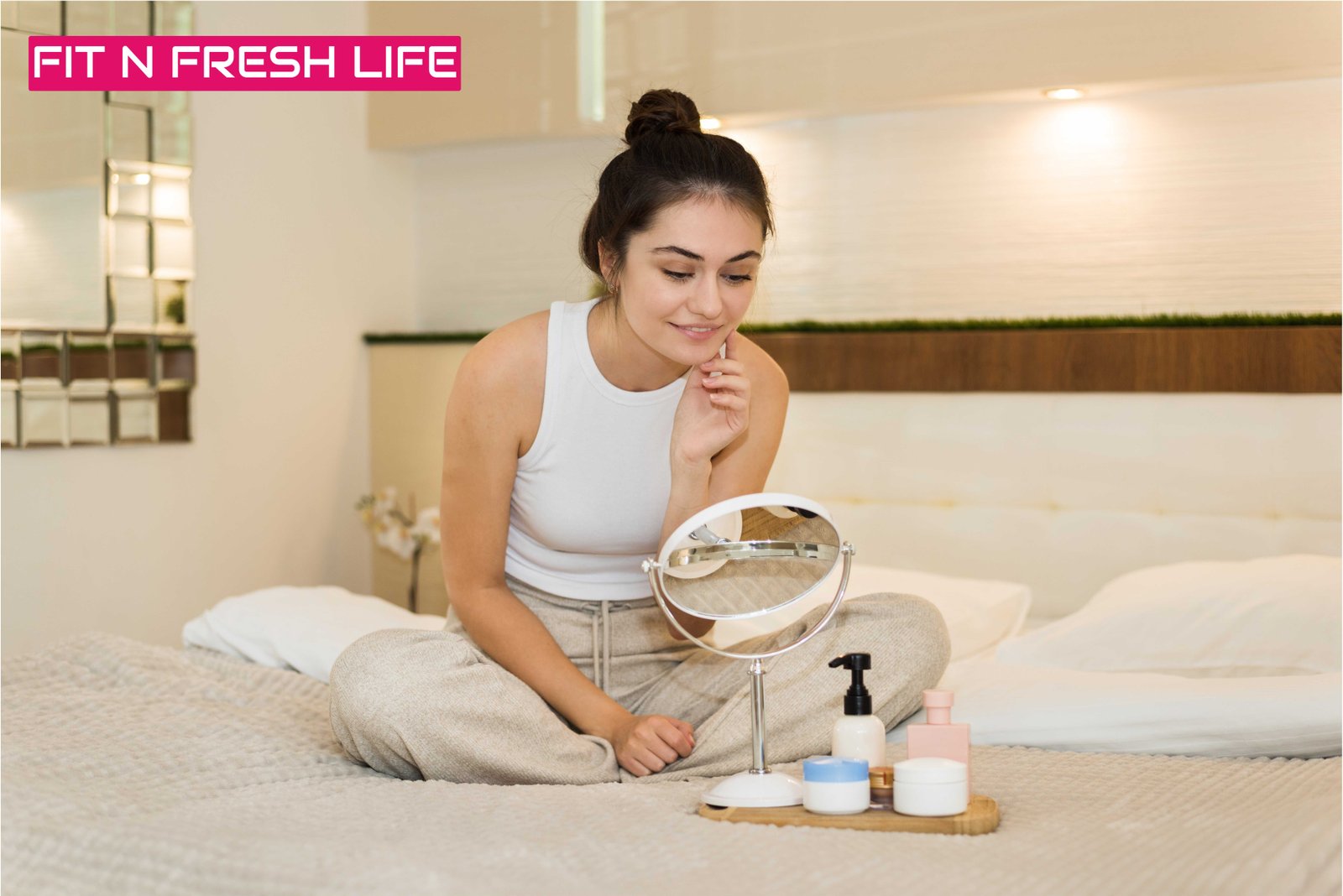
Skincare has become a little overwhelming.
At one point, having a good skincare routine seemed to mean having a product for almost everything. Cleanser, toner, exfoliator, serum, eye cream, face oil, moisturizer, sleeping mask, spot treatment, and several other products could easily end up sitting on the bathroom shelf.
Then came the long skincare routines on social media, where people would apply product after product and explain what each one was supposed to do. It looked impressive, but it also made skincare feel much more complicated than it needs to be.
Now a simpler approach is getting attention again. It's often called skinimalism, and the basic idea is pretty easy to understand: instead of constantly adding more products, focus on using fewer products that actually work well for your skin.
The goal isn't to stop caring about your skin. It's about cutting out some of the unnecessary steps and giving your skin a routine that is easier to understand, easier to maintain, and less likely to become overwhelming.
So, What Exactly Is Skinimalism?
Skinimalism is essentially a "less is more" approach to skincare.
Instead of buying a separate product for every small skin concern, you start with the basics and only add something when you actually have a reason to use it.
For example, a simple routine might consist of a gentle cleanser, moisturizer, and sunscreen during the day. Someone who wants to address a specific concern could then add one targeted product rather than adding five different serums at once.
It doesn't mean everyone has to use exactly three products. Some people may need or prefer a few more steps. The point is to avoid making your routine complicated simply because a product is trending.
Why Are People Moving Away From Huge Skincare Routines?
One reason is that people are starting to realize that more products don't necessarily mean better skin.
When you use several active ingredients at the same time, it can become difficult to figure out what is actually helping. If your skin becomes dry, irritated, or uncomfortable, you may not even know which product caused the problem.
There's also the simple issue of consistency.
A routine that takes twenty minutes and involves eight different products might look great on a social media video, but it's not necessarily realistic for everyday life. A routine that takes only a few minutes is much easier to stick with in the morning and before bed.
And consistency matters. A simple routine that you follow regularly can make more sense than an expensive routine that you use for a week and then forget about.
The Basic Skincare Routine Most People Can Start With
You don't need a bathroom shelf full of products to build a basic skincare routine.
For many people, the starting point can be surprisingly simple.
Cleanser: A gentle cleanser can help remove sweat, excess oil, dirt, makeup, and sunscreen from the skin.
Moisturizer: Moisturizer helps support the skin's outer barrier and can reduce the feeling of dryness or tightness.
Sunscreen: During the day, sunscreen is one of the most useful skincare steps because regular exposure to ultraviolet radiation can contribute to premature skin aging and skin damage.
Once these basics are in place, you can decide whether you actually need additional products.
What Happened to Toner?
Toner isn't necessarily a bad product. It's just not something everyone has to use.
Modern toners can be very different from the old-fashioned products that were often associated with a strong, drying feeling. Some contain hydrating ingredients, while others contain exfoliating ingredients or other active ingredients.
If you enjoy using a toner and your skin responds well to it, there's nothing wrong with keeping it in your routine.
But if you don't use one, you aren't automatically missing an important step. For someone trying to simplify their skincare routine, toner may be one of the first products worth questioning.
Do You Really Need Several Serums?
This is where skincare routines can become complicated very quickly.
You might see one serum for hydration, another for brightening, another for fine lines, another for uneven skin tone, and another for pores. Before long, you're layering several active ingredients without being completely sure whether they work well together.
There can be a place for targeted serums, but using more isn't necessarily better.
If you have a particular concern, it can make more sense to choose one product designed for that concern and give it enough time before deciding whether you need something else.
This approach also makes it easier to understand your skin. If you introduce one new product and your skin reacts badly, it's much easier to identify the possible cause.
Why Your Skin Barrier Deserves Attention
You may have heard the phrase "skin barrier" quite a lot recently. It's not just another social media buzzword.
Your skin has a protective outer layer that helps keep moisture in and helps protect the skin from things in the environment. When that barrier becomes irritated or overly dry, the skin may feel tight, rough, sensitive, or uncomfortable.
One common mistake is trying to solve every skin problem by adding another active product. Sometimes the better move is actually to take a step back.
Gentle cleansing, regular moisturizing, avoiding unnecessary irritation, and using sunscreen can all be sensible parts of a basic routine.
If your skin is already irritated, adding several exfoliating products because you want faster results may make things worse rather than better.
Could Using Too Many Products Irritate Your Skin?
It can.
Not everyone reacts badly to a complicated skincare routine, but using multiple active ingredients can increase the chance of irritation, especially if products are introduced too quickly.
For example, someone might start using a strong exfoliating product, a retinoid, a brightening serum, and another active treatment all within the same week. If their skin becomes red or uncomfortable, it becomes difficult to know which product is responsible.
That's one reason a slower approach can be useful.
Introduce new products gradually. Give your skin time to adjust, and don't feel pressured to use every active ingredient you see recommended online.
Skinimalism Doesn't Mean Ignoring Your Skin Type
Keeping things simple doesn't mean using the same products as everyone else.
Someone with oily skin may prefer a lightweight moisturizer, while someone with dry skin may feel more comfortable with a richer cream. Someone with sensitive skin may need to be particularly careful about fragrances and strong active ingredients.
Even people with similar skin types can react differently to the same product.
That's why skincare trends should be treated as ideas rather than rules. Your friend's favorite serum might work beautifully for them and still be completely unnecessary for you.
A Simple Routine for the Morning
If your current morning routine has become complicated, try stepping back and looking at what you actually need.
Start with a gentle cleanse if your skin needs it. Follow with a moisturizer if you need one, and finish with sunscreen.
If you enjoy using a serum, you can place it between cleansing and moisturizing. But don't feel like you need several layers just because skincare videos make it look normal.
The best morning routine is one that you can realistically follow every day.
And What About Nighttime?
Your nighttime routine can be just as simple.
If you've worn makeup or sunscreen during the day, cleansing properly is important. After cleansing, apply a moisturizer or other products that you know your skin tolerates well.
If you're using a treatment product, follow its instructions rather than assuming that using more will make it work faster.
There's also something nice about having a short nighttime routine. Instead of standing in front of the mirror trying to remember which serum goes first, you can finish your skincare in a few minutes and get on with your evening.
What About Exfoliation?
Exfoliation can be useful for some people, but it's another area where it's easy to go too far.
Exfoliating products are designed to help remove dead skin cells from the surface of the skin. Depending on the product, they can contain physical particles or chemical exfoliating ingredients.
Using an exfoliating product more often than your skin can tolerate doesn't necessarily give you smoother skin faster. It may instead leave your skin feeling dry, irritated, or sensitive.
If you're already using other active ingredients, it's especially worth paying attention to how your skin responds.
There is no prize for having the most complicated routine.
How to Start a Skinimalist Routine Without Throwing Everything Away
You don't have to look at your bathroom shelf and immediately throw half of it in the bin.
Start by making a small list of what you currently use. Then ask yourself why you're using each product.
Does it solve a specific problem? Do you actually enjoy using it? Does your skin tolerate it? Have you noticed any benefit from it?
If you can't answer any of those questions, you may have found a product that isn't doing much for you.
Keep the basics that work and slowly remove unnecessary steps. If your skin is happier with fewer products, there's no reason to add them back just because they're popular.
Common Skinimalism Mistakes to Avoid
Ironically, even a simple skincare trend can be overcomplicated. A few things are worth remembering:
- Don't copy someone else's entire routine: Their skin, lifestyle, and needs may be completely different from yours.
- Don't introduce several new products at once: Give yourself a chance to see how your skin reacts.
- Don't skip sunscreen: Simplifying your routine shouldn't mean removing useful basics.
- Don't expect overnight results: Most skincare changes take time and consistency.
- Don't keep using something that irritates your skin: More discomfort doesn't mean the product is working better.
- Don't buy products just because they're trending: A popular product isn't automatically necessary for your routine.
Is Skinimalism Actually Better for Everyone?
Not necessarily.
Some people genuinely enjoy a longer skincare routine. If you have several products that work well together and you enjoy taking the time to use them, there's no need to suddenly become a minimalist.
Skinimalism is better understood as a reminder to be more intentional about what you're putting on your skin.
If your routine has ten products and every one of them serves a purpose, that's your choice. But if you have ten products because you kept buying whatever appeared on your social media feed, simplifying might be worth trying.
The Money-Saving Side of a Simpler Routine
There's another benefit that doesn't get talked about enough: your wallet may appreciate it.
Skincare can become expensive surprisingly quickly. A few affordable products might not seem like much, but constantly buying new serums, masks, treatments, and limited-edition products can add up.
A simpler routine gives you a chance to spend money on products you actually need instead of constantly experimenting.
It can also reduce waste. Half-used bottles sitting in a bathroom cabinet aren't particularly useful, especially when you've already moved on to another product.
A Simple Skinimalist Checklist
If you're thinking about simplifying your routine, start here:
- Keep a gentle cleanser that your skin tolerates well.
- Use a moisturizer suited to your skin's needs.
- Make sunscreen part of your daytime routine.
- Choose targeted treatments only when you have a specific reason to use them.
- Introduce new products one at a time.
- Give products reasonable time before judging the results.
- Stop using products that consistently cause irritation.
- Don't feel pressured to follow every skincare trend.
Final Thoughts
Skinimalism isn't really about having the smallest possible skincare collection. It's about being more thoughtful about what you use.
Skincare doesn't have to become a daily science experiment with ten different bottles lined up in front of the mirror. For many people, a few well-chosen products can make a routine easier to maintain and much less stressful.
Start with the basics. Pay attention to how your skin behaves. Add something when you have a genuine reason for adding it, rather than because someone online says you need it.
And if your current routine is working well, you don't have to change it just because minimal skincare is trending again.
Sometimes the best skincare routine is simply the one you understand, can afford, and will actually stick with.
Disclaimer: This article is for general informational purposes only and is not intended to provide medical or dermatological advice. Everyone's skin is different, and products that work well for one person may not work for another. If you have persistent irritation, severe acne, unexplained skin changes, or another ongoing skin concern, consider speaking with a qualified dermatologist or healthcare professional.