There is a new word showing up everywhere in the wellness world: sleepmaxxing.
From blackout curtains and cooling pillows to sleep trackers, magnesium drinks, special bedtime routines and even mouth taping, people are looking for ways to squeeze every possible benefit out of their sleep.
Some of these habits are sensible. Others are expensive, unnecessary, or simply not suitable for everyone.
That is what makes sleepmaxxing interesting. The idea itself is not really new. People have always tried to improve their sleep. What has changed is how many products, routines and “sleep hacks” are now being shared online.
So, do you actually need a perfect bedroom and a 12-step nighttime routine to sleep well?
Probably not.
For most people, improving sleep starts with a few simple habits that are easy to repeat every night. Here is what is actually worth trying—and what you may not need to worry about.
What Exactly Is Sleepmaxxing?
Sleepmaxxing is a social-media term for trying to optimize your sleep as much as possible. It can include everything from improving your bedtime routine to using technology, supplements, special bedding and other products designed to make sleep better.
The trend has become popular because sleep is no longer viewed simply as “time when you are not doing anything.” People are increasingly interested in how sleep affects their energy, mood, concentration, exercise recovery and general wellbeing.
That part makes sense.
The problem begins when improving sleep turns into another source of pressure. You do not need to monitor every minute of your sleep or spend hundreds of dollars on products to have a healthy sleep routine.
The American Academy of Sleep Medicine recommends that adults regularly get at least seven hours of sleep, while also emphasizing sleep quality, timing and regularity.
The simple idea: Sleepmaxxing is most useful when it helps you create better habits—not when it makes you obsess over getting “perfect” sleep.
1. Start With Your Sleep Schedule
This is probably one of the least exciting sleep tips, but it can be one of the most useful.
Going to bed and waking up at completely different times every day can make it harder to establish a predictable sleep routine. A more consistent schedule gives your body a regular pattern to work with.
You do not have to go to bed at exactly the same minute every night. Life does not work that way. But keeping your bedtime and wake-up time reasonably consistent can be a good starting point.
If you currently go to sleep at 1 a.m. on some nights and 10 p.m. on others, changing that gradually may be easier than trying to completely reset your schedule overnight.
2. Make Sure You Are Giving Yourself Enough Time to Sleep
One of the biggest mistakes people make is trying to improve sleep quality without giving themselves enough time to sleep in the first place.
You can have the perfect pillow, the darkest bedroom and the most relaxing nighttime routine, but none of those things can replace adequate sleep time.
For adults, the AASM recommends at least seven hours of sleep on a regular basis. Individual needs can vary, but regularly sleeping too little is not something that should be treated as a badge of productivity.
If you need to wake up at 7 a.m., for example, think backwards from that time rather than waiting until you are exhausted before going to bed.
Sometimes the best sleep hack is simply going to bed earlier.
3. Give Your Bedroom a Sleep-Friendly Makeover
You do not need an expensive “sleep sanctuary.” Your bedroom simply needs to be comfortable enough that it does not constantly interfere with your sleep.
Look at the basics:
- Is the room too warm?
- Is outside light coming through the windows?
- Is noise waking you up?
- Is your mattress uncomfortable?
- Is your phone constantly lighting up?
A cool, quiet and comfortable bedroom can make a noticeable difference for many people.
This is one area where sleepmaxxing can actually be practical. Instead of buying ten different gadgets, fix the obvious problems first.
4. Stop Turning Your Bed Into a Second Office
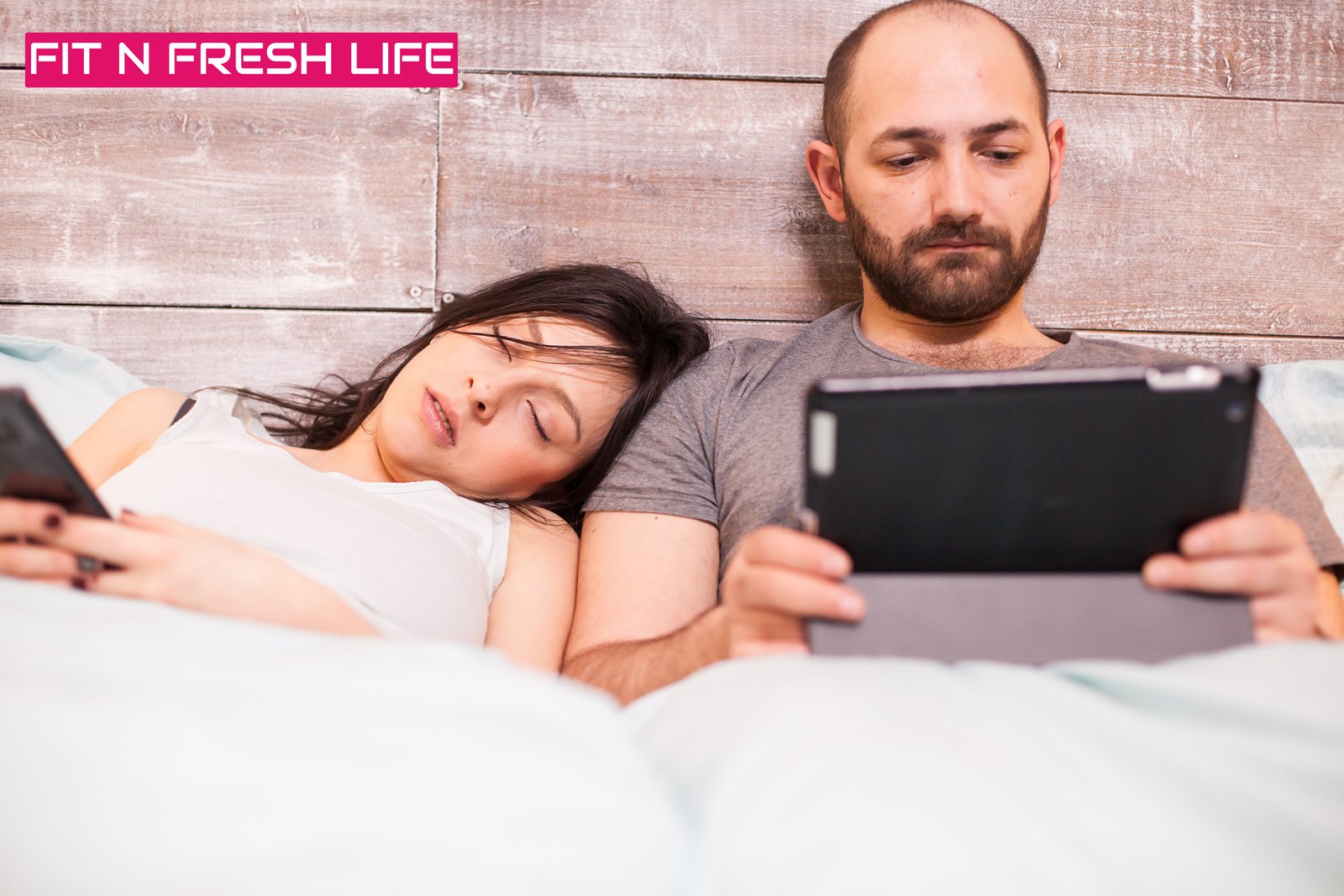
If you spend your evening answering emails, watching stressful videos, working on your laptop and scrolling through social media from bed, your brain may not get much of a transition between “busy mode” and “sleep mode.”
Try to make your bed primarily associated with sleep and relaxation.
This does not mean you have to follow a strict rule every night. But if your bed has become the place where you work, eat, scroll and worry about tomorrow, creating a little separation may help.
5. The Phone Problem Is Bigger Than Blue Light
People often talk about phones and sleep only in terms of blue light.
But there is another issue: what you are actually looking at.
Watching an argument online, reading stressful news, checking work messages or endlessly scrolling short videos can keep your brain engaged when you are supposed to be winding down.
A recent AASM survey found that 38% of adults said using a phone or tablet for news and current events before bed made their sleep slightly or significantly worse.
So instead of worrying about having the perfect blue-light settings, start by giving yourself a period before bed when you are not consuming stressful or stimulating content.
Even putting your phone away 30 minutes before bed can be a realistic experiment.
6. Create a Short Wind-Down Routine
You do not need a complicated two-hour nighttime ritual.
A simple 20-to-30-minute wind-down period may be enough to tell your brain that the day is coming to an end.
Your routine could include taking a shower, washing your face, reading a few pages of a book, stretching lightly, preparing clothes for tomorrow or simply sitting somewhere quiet.
The important part is repetition.
If the same relaxing activities happen around the same time most nights, they can become a familiar transition into bedtime.
7. Do Not Become Obsessed With Your Sleep Tracker
Smartwatches and sleep-tracking devices can be interesting. They may help you notice patterns in your sleep schedule or remind you that you have been consistently sleeping too little.
But there is a difference between using a tracker as a helpful tool and checking your sleep score every morning as if it were a test result.
If seeing a low score makes you anxious about whether you slept “correctly,” the tracker may be creating a new problem.
Sleep is not a performance competition.
You can have a night where your tracker gives you an average score and still wake up feeling perfectly fine. Likewise, a high score does not necessarily mean you will feel amazing every day.
Use sleep data to notice broad patterns rather than judging yourself based on a single night's number.
8. Be Careful With Viral Sleep Supplements
This is where it is worth slowing down.
Social media is full of drinks, powders, gummies and supplements marketed specifically for nighttime. Magnesium is one example that has become especially popular online.
That does not automatically mean every sleep supplement is useful—or necessary.
The AASM has noted that magnesium use for sleep has grown substantially, while research supporting magnesium supplements specifically for insomnia and other sleep disorders remains limited.
If you are thinking about taking a supplement for sleep, consider why you want it in the first place. If your real problem is staying up until 1 a.m. watching videos, a supplement may not solve the underlying issue.
And if you regularly have trouble sleeping, it is better to discuss the problem with a healthcare professional rather than continuously adding new supplements.
9. You Probably Don't Need Mouth Taping
Mouth taping has become one of those internet sleep hacks that looks simple enough to try.
But simple does not always mean appropriate.
Putting tape over your mouth can be particularly concerning for people who have breathing problems, nasal obstruction or possible sleep-related breathing disorders.
If you snore heavily, regularly wake up gasping or choking, have significant daytime sleepiness or suspect that your breathing is being interrupted during sleep, experimenting with viral hacks is not the right approach.
Those symptoms are worth discussing with a healthcare professional.
10. Exercise During the Day
Sleepmaxxing sometimes becomes so focused on what happens at bedtime that people forget about the rest of the day.
Your daytime habits matter too.
Regular physical activity can support overall health and can be part of a healthy sleep routine. You do not necessarily need an intense workout every day. Walking, cycling, strength training, recreational sports or another activity you actually enjoy can all be useful ways to stay active.
The bigger goal is to avoid spending the entire day sitting and then expecting your body to immediately switch off at night.
11. Watch Your Evening Caffeine
If you are drinking coffee, energy drinks or other caffeinated beverages late in the day and then wondering why you cannot fall asleep, this is an easy area to experiment with.
People vary in how sensitive they are to caffeine, so there is no single cutoff that works perfectly for everyone.
If your sleep is inconsistent, try moving caffeine earlier in the day and see whether your sleep changes.
You do not necessarily need to eliminate coffee completely. Sometimes timing matters more than elimination.
12. Don't Chase the “Perfect” Eight Hours
Another problem with sleepmaxxing is the idea that every night needs to be perfect.
Maybe you usually sleep well but have one terrible night because of travel, work, children, stress or simply because life happened.
That does not mean your entire sleep routine has failed.
Look at your habits over weeks rather than judging yourself based on one night.
Healthy sleep is about a pattern, not perfection.
What Sleepmaxxing Habits Are Actually Worth Trying?
If you want to experiment with sleepmaxxing, start with the boring stuff before spending money on gadgets.
Worth trying:
- Keeping a reasonably consistent sleep and wake schedule
- Giving yourself enough time for sleep
- Keeping the bedroom comfortable, quiet and dark
- Reducing stressful screen use before bed
- Creating a short relaxing bedtime routine
- Getting regular daytime physical activity
- Paying attention to late-day caffeine
- Using sleep tracking to notice patterns rather than obsess over scores
What You Probably Don't Need
You do not need to purchase an expensive mattress, sleep tracker, supplement collection or collection of “sleep gadgets” simply because someone online says they changed their life.
If a product makes your bedroom more comfortable and fits your budget, that is one thing. But do not confuse expensive with effective.
The same applies to complicated routines. If your nighttime routine takes longer than your actual bedtime preparation, it may be creating more work than benefit.
What About Sleeping With a Fan or White Noise?
Some people sleep better with consistent background noise. Others need complete silence.
A fan, white-noise machine or another quiet background sound can be useful if unpredictable noises are disturbing your sleep.
But again, there is no universal sleep setup.
The best bedroom is the one that allows you to sleep comfortably and consistently.
When Sleep Problems Shouldn't Be Treated as a Wellness Trend
There is a big difference between wanting to improve an otherwise healthy sleep routine and regularly struggling to sleep.
If you frequently have difficulty falling asleep, wake repeatedly during the night, wake up feeling exhausted despite getting enough time in bed, or experience loud and frequent snoring or breathing interruptions, it may be worth talking with a healthcare professional.
Sleep disorders can go unrecognized for a long time, and simply adding more sleep hacks may not address the underlying problem. The AASM specifically encourages people with ongoing sleep concerns to discuss them with a healthcare professional.
A Simple Sleepmaxxing Routine to Try Tonight
If you want to try the trend without making it complicated, keep it simple.
About one hour before bed: finish demanding work and start slowing down.
About 30 minutes before bed: put your phone away or at least stop consuming stressful content.
Before getting into bed: make the room comfortable, dim the lights and do something relaxing.
At bedtime: give yourself enough time to sleep rather than treating sleep as something you can squeeze into the last few hours of the day.
The next morning: get up around your normal time and try to keep your schedule reasonably consistent.
Do this for several nights before deciding whether it helps.
The Bottom Line
Sleepmaxxing sounds like a complicated new wellness trend, but the most useful parts of it are surprisingly simple.
You do not need to turn your bedroom into a high-tech laboratory. You do not need a shelf full of supplements. And you certainly do not need to feel guilty because you did not achieve a perfect sleep score.
Start with the basics: enough sleep, a reasonably consistent schedule, a comfortable bedroom, less stimulating screen time at night and a relaxing transition into bed.
Once those habits are in place, you can experiment with other changes if you genuinely find them helpful.
The goal should not be to become perfect at sleeping.
The goal is to make healthy sleep easier, more consistent and less stressful.
Disclaimer: This article is for general informational and educational purposes only and is not medical advice. Sleep needs and sleep problems vary from person to person. If you have persistent insomnia, excessive daytime sleepiness, loud snoring, breathing interruptions during sleep, or other ongoing concerns about your sleep, speak with a qualified healthcare professional.