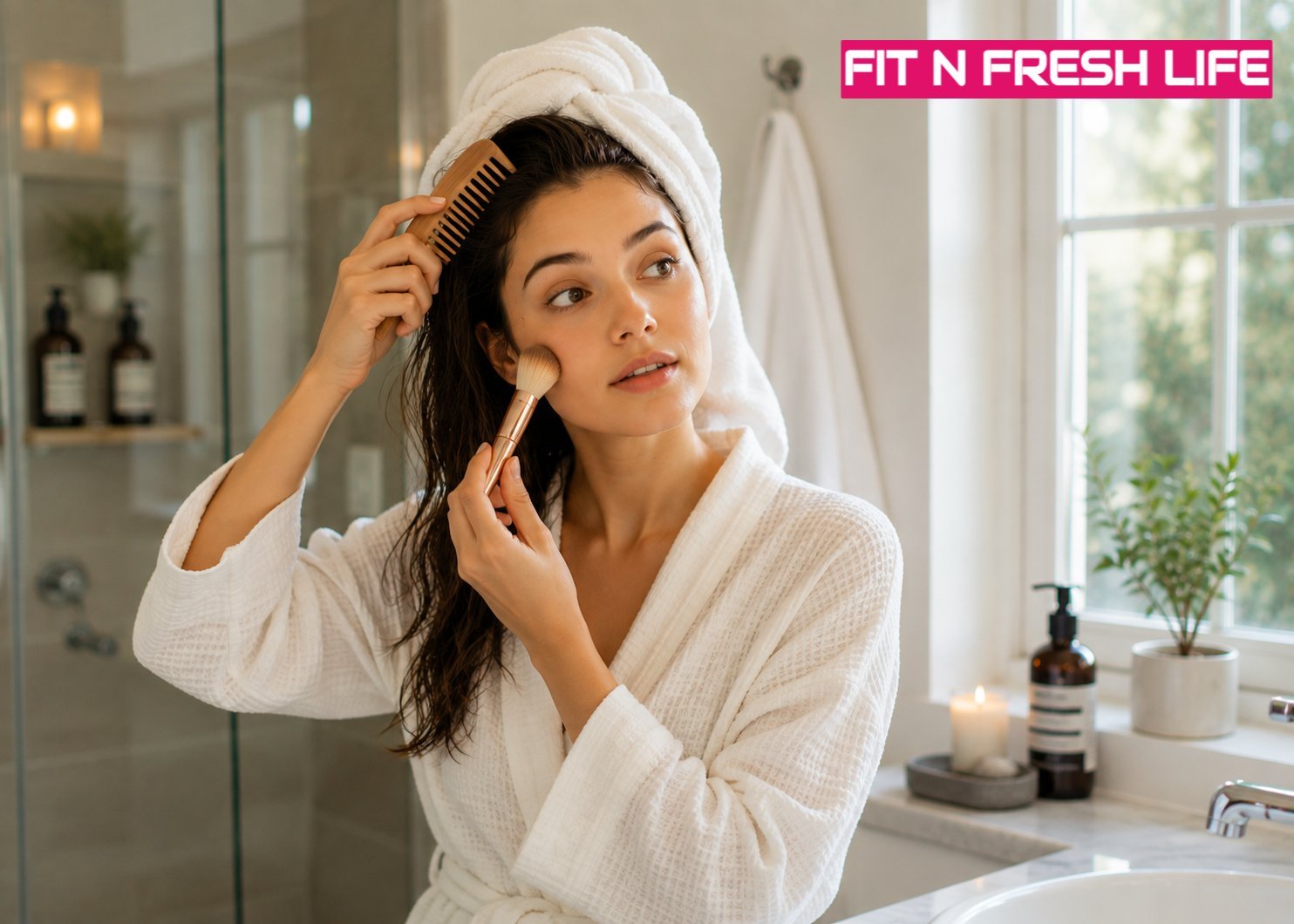
Most people think their shower routine ends when they turn off the water.
But what you do during the next few minutes can matter just as much as what you did in the shower.
You grab a towel, rub your hair, dry your face, put on some clothes and continue with your day. These steps seem completely ordinary, yet some of them can contribute to dry skin, irritated skin, hair breakage or simply make your hair harder to manage.
The good news is that you don't need an expensive collection of products to improve what happens after your shower.
A few small changes — especially being gentler with wet hair and moisturizing skin while it is still slightly damp — can make your routine much easier on your hair and skin.
1. Rubbing Your Hair Aggressively With a Towel
This is one of those habits that feels completely normal.
Your hair is soaking wet, so you grab a towel and vigorously rub it until most of the water is gone.
The problem is that wet hair can be more vulnerable to breakage, and rough handling can put unnecessary stress on the hair.
The American Academy of Dermatology recommends gently wrapping wet hair in a towel to absorb water rather than aggressively rubbing it dry. Depending on your hair type, allowing it to air-dry can also be a useful option.
Try wrapping your hair in a soft towel or T-shirt and gently pressing or allowing the fabric to absorb excess water.
You don't need to get every drop out immediately.
Think of the towel as something that absorbs water rather than scrubs your hair.
2. Brushing Your Hair Too Roughly While It's Wet
Wet hair can be tricky to manage.
It is tempting to grab a brush and pull straight from the roots to the ends, especially when you are in a hurry.
For many hair types, this can create unnecessary pulling and breakage.
Dermatologists generally recommend handling wet hair gently. For straight hair, allowing it to dry somewhat before gently combing can reduce the risk of damage. People with tightly curled or textured hair may find that detangling while the hair is damp or conditioned works better for their texture.
There isn't one brushing rule that works for everyone.
The important thing is to avoid aggressively fighting through knots.
If your hair is tangled, start near the ends and gradually work upward. A wide-tooth comb can also be useful for gentle detangling, depending on your hair type.
If you regularly see short broken hairs around your brush, changing how you handle wet hair may be worth considering.
3. Waiting Too Long to Moisturize Your Skin
After a shower, your skin still contains some water.
Instead of completely drying yourself and then waiting another 20 or 30 minutes before applying moisturizer, consider moisturizing while your skin is still slightly damp.
The American Academy of Dermatology recommends applying moisturizer soon after bathing because it helps trap existing moisture in the skin.
This can be particularly useful if your skin tends to feel tight, rough or dry after showering.
You don't need to cover yourself in a huge amount of product.
Gently pat away excess water, leaving the skin slightly damp, and apply a moisturizer that suits your skin.
For very dry or sensitive skin, dermatologists often recommend fragrance-free creams or ointments rather than lighter lotions.
4. Drying Your Skin by Scrubbing It With a Towel
Your skin and hair may have something in common here: they generally don't need aggressive towel treatment.
After a shower, vigorously rubbing your skin with a rough towel can be irritating, especially if your skin is already dry or sensitive.
Instead, gently pat your skin dry.
You don't need to make your skin completely dry before moisturizing. Leaving a little moisture on the surface can make it easier to apply moisturizer immediately afterward.
This is particularly helpful during colder or drier weather, when many people notice that their skin becomes tighter and more uncomfortable after bathing.
If you regularly experience dry skin, also pay attention to the shower itself. Very hot water and long showers can make dryness worse. The AAD recommends short showers with warm rather than hot water for people dealing with dry skin.
5. Going Straight From the Shower Into Tight Clothes
This one is less about a single “wrong” habit and more about what your skin needs after getting wet.
If you immediately put on tight, uncomfortable clothing while your skin is still damp, you may feel hotter, stickier or more irritated.
This can become especially noticeable after exercise, on hot days or if you tend to sweat heavily.
Instead, give yourself a moment to dry properly and choose comfortable clothing that allows your skin to breathe.
If you have sensitive skin, it can also help to pay attention to the fabrics and laundry products you use. Fragrance in skincare and laundry products can irritate some people's sensitive skin, so fragrance-free options may be worth considering if irritation is a recurring problem.
Your Shower Water May Be Part of the Problem
Sometimes people blame their moisturizer, shampoo or conditioner when the bigger issue is what happens before they even leave the bathroom.
If your shower is extremely hot and lasts a long time, your skin may become noticeably drier afterward.
Hot water can remove some of the natural oils that help keep the skin comfortable.
You don't have to take cold showers to protect your skin.
Warm water is a much more realistic option for most people.
The AAD recommends keeping showers relatively short and using warm rather than hot water, especially for people with dry skin.
If you love a long, very hot shower, try reducing the temperature slightly and shortening the time rather than changing everything overnight.
Don't Assume More Scrubbing Means Cleaner Skin
Another common post-shower mistake is trying to remove every possible trace of oil, sweat and dead skin.
Scrubbing your skin until it feels extremely clean can actually leave it feeling tight or irritated.
Your skin does not need to feel squeaky to be clean.
For everyday washing, gentle cleansing is usually a better approach than repeatedly using harsh scrubs or rough tools.
This is particularly important if your skin is dry, sensitive or easily irritated.
If you regularly use exfoliating products, scrubs or acids, consider whether your skin actually needs all of them.
More products do not automatically mean better skin.
What About Your Face?
Your face deserves a little extra attention because facial skin can react differently from the skin on your body.
After washing your face in the shower, avoid rubbing it aggressively with a towel.
Gently pat it dry and follow with the products appropriate for your routine.
If your skin is dry, applying moisturizer while it is still slightly damp may help reduce that tight feeling.
If you use active skincare ingredients, such as exfoliating acids or retinoids, don't assume you need to add more products simply because your skin feels dry.
Sometimes the better solution is simplifying the routine.
What About Hair Conditioner After the Shower?
If you use a rinse-out conditioner, most of it is designed to be used during the shower and rinsed away.
After the shower, some people use a leave-in conditioner or another styling product depending on their hair type.
This can be useful, but you don't necessarily need one.
Fine or straight hair can become weighed down by heavy products, while curly, thick or dry hair may benefit from more conditioning.
The American Academy of Dermatology recommends choosing leave-in products based on your hair type rather than assuming the same product works for everyone.
If your hair suddenly looks greasy or flat after adding a new leave-in product, the issue may simply be that you are using too much or using a formula that does not suit your hair.
Don't Tie Wet Hair Too Tightly
If your hair is long, putting it straight into a tight ponytail after a shower can seem like the easiest solution.
But wet hair plus repeated tension is not an ideal combination.
Instead, allow your hair to dry to a more manageable state when practical and avoid hairstyles that pull tightly on the hairline.
Repeated tight hairstyles can contribute to traction-related hair loss over time, which is why dermatologists recommend avoiding styles that consistently pull on the hair.
A loose hairstyle is often a better option when you simply need your hair out of the way.
Don't Forget Your Scalp
Your scalp is skin too.
If your scalp feels itchy, excessively oily, dry or flaky after washing, take note of the pattern.
The answer isn't always to wash it more aggressively.
Your shampoo should primarily be worked into the scalp rather than repeatedly scrubbing the entire length of your hair. This helps remove excess oil and buildup from the scalp while reducing unnecessary drying of the hair lengths.
If you regularly experience significant itching, redness, thick scaling or persistent flakes, consider speaking with a dermatologist rather than continually switching products.
Your Hair Doesn't Need to Be Completely Dry Immediately
There is sometimes an unnecessary rush to get hair completely dry as quickly as possible.
That often means using a high heat setting for a long time.
Heat styling can contribute to hair damage, especially when used excessively.
If you use a blow dryer, consider using a lower or medium heat setting when practical and keep the dryer moving instead of concentrating heat on one area for too long.
When you have the time, allowing some of the moisture to leave the hair naturally can reduce how much heat styling you need.
The AAD recommends limiting excessive heat and using lower heat settings to reduce damage.
The First Five Minutes After a Shower Can Be Simple
You don't need a complicated routine.
Try thinking of your first few minutes after the shower in this order:
- Gently remove excess water from your hair.
- Pat your skin dry instead of aggressively rubbing it.
- Apply moisturizer while your skin is still slightly damp.
- Detangle hair gently using a method suitable for your hair type.
- Avoid tight hairstyles while your hair is still wet.
- Use heat styling only when needed and avoid unnecessarily high temperatures.
That is enough for most people to build a more hair- and skin-friendly post-shower routine.
What If Your Skin Still Feels Dry?
If you are doing everything gently and your skin still feels dry, look at the bigger picture.
How hot are your showers?
How long do they last?
Are you using strongly fragranced products?
Are you applying moisturizer regularly?
Are you using scrubs or exfoliating products frequently?
Is the weather particularly dry?
Air conditioning and indoor heating can also affect how dry your environment feels.
Sometimes changing one or two of these factors is more useful than buying another skincare product.
What If Your Hair Keeps Breaking?
If your hair continues to break despite being gentle, look beyond your shower routine.
Consider how often you use heat tools, whether your hairstyles are tight, how frequently you color or chemically treat your hair, and how aggressively you brush or detangle it.
Hair damage can accumulate from several habits rather than one single mistake.
If you are experiencing noticeable hair loss rather than simple breakage, or if the change is sudden or persistent, it is better to seek professional advice instead of assuming your towel or shampoo is responsible.
The “Gentler After Shower” Rule
If you want one simple rule to remember, make it this:
Be gentler with your hair and skin for the few minutes after your shower.
Don't scrub your skin dry. Don't aggressively rub your hair. Don't yank through knots. Don't automatically reach for the hottest blow-dryer setting.
Give your skin some moisture. Give your hair some time. Choose products based on what your skin and hair actually need.
These changes are simple enough that they don't require a complete lifestyle makeover.
The Bottom Line
Your shower may only last a few minutes, but what you do afterward can influence how your hair and skin feel for the rest of the day.
Drying too aggressively, brushing wet hair roughly, delaying moisturizer, using excessive heat and wearing tight hairstyles are all habits worth reconsidering if you are dealing with dryness, irritation or hair breakage.
You don't need a complicated post-shower routine.
Start with the basics: pat instead of rub, handle wet hair gently, moisturize damp skin and give your hair a break from unnecessary heat and tension.
Sometimes improving your beauty routine is not about adding another product.
It is simply about changing what you already do.
Health & Beauty Disclaimer: This article is for general educational purposes only. Hair and skin concerns can have many different causes. If you experience persistent irritation, significant hair loss, severe dryness, scalp problems or other concerning changes, consider speaking with a qualified healthcare professional or dermatologist.