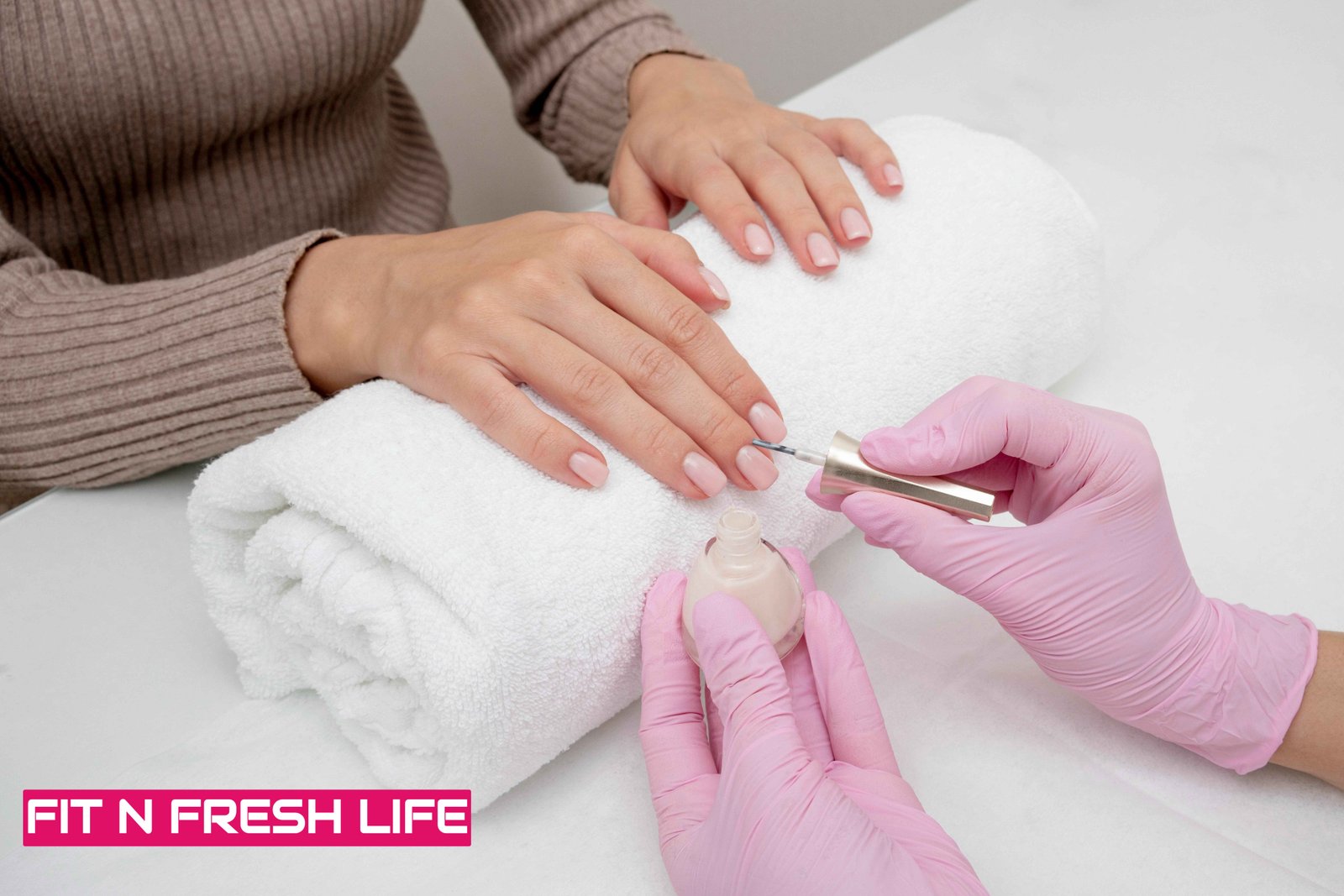
Your nails probably aren't something you think about unless you're trimming them, painting them, or suddenly notice that one looks different from the others. But nails can sometimes give you useful clues about what's happening with your body.
That doesn't mean every ridge, white spot, or color change is a hidden health problem. Nails are affected by everyday things such as injuries, manicures, water, cleaning products, aging, and simple changes in nail growth. Still, a new or unexplained change in your nails is worth noticing, especially if it continues or affects several nails.
Here's what some common nail changes can mean — and when it's better to have them checked rather than guessing from the appearance alone.
1. Brittle, Peeling or Easily Broken Nails
If your nails constantly split, peel, or break, the first place to look may actually be your daily routine.
Frequent exposure to water, cleaning products, harsh chemicals, or repeated wet-and-dry cycles can make nails more fragile. Picking at your nails or using them as tools can also lead to cracking and splitting.
Lengthwise ridges can also become more noticeable as people get older, and brittle nails are common. The American Academy of Dermatology notes that spending a lot of time with wet hands or using harsh chemicals without protection can contribute to brittle nails.
If your nails have suddenly become much more fragile without an obvious change in your routine, however, it's worth discussing the change with a healthcare professional.
2. Nails That Look Pale or Unusually White
Nail color can change for many ordinary reasons, including injury, nail products, or the natural appearance of the nail.
But noticeable changes across one or more nails can sometimes be associated with health conditions. For example, the NHS lists anemia, thyroid problems, diabetes, and certain heart, lung, or liver conditions among possible causes of some nail abnormalities.
This is an important distinction: a pale or white-looking nail does not automatically mean you have a medical problem. Nail appearance alone isn't enough to diagnose anything.
If the color change is new, unexplained, persistent, or accompanied by other symptoms, getting it checked is a much better approach than trying to identify the cause yourself.
3. Yellow or Thickened Nails
Yellow nails can sometimes have a very simple explanation. Nail polish, especially darker shades, can temporarily stain the nail. Smoking can also contribute to yellow discoloration.
On the other hand, yellow nails that become thicker, brittle, crumbly, or separated from the nail bed may be associated with a fungal nail infection. Fungal infections can cause nails to change color, thicken, crack, crumble, or lift.
If several toenails gradually become thicker and discolored, don't assume it's simply aging or staining. A healthcare professional can determine whether an infection or another nail condition is responsible.
4. Deep Horizontal Lines Across the Nail
Not all nail lines mean the same thing.
Fine vertical lines are common and often aren't a reason for concern. Deeper grooves that run horizontally across the nail are different. These are sometimes called Beau's lines.
They can appear when nail growth is temporarily slowed or interrupted. A significant illness, fever, injury, major stress, or some medical treatments can be associated with these changes.
The interesting part is that the line may appear after the event that caused it, because nails grow slowly. In other words, the mark you see today may reflect something that happened weeks or months earlier.
5. Tiny Dents or Pits in the Nails
If you look closely and notice lots of tiny dents across the surface of a nail, it may be more than ordinary texture.
Small pits can occur with conditions such as psoriasis, eczema, or alopecia areata. Nail psoriasis can also cause discoloration, crumbling, separation from the nail, or buildup underneath the nail.
Again, this doesn't mean that seeing a few small dents automatically means you have one of these conditions. Nails can be damaged in many ways. But persistent or widespread pitting is something worth showing to a dermatologist.
6. Spoon-Shaped Nails
Healthy nails generally have a gentle curve. In some people, the center of the nail becomes noticeably depressed while the edges curve upward, creating a shape that resembles a small spoon.
This appearance is known as koilonychia. It can sometimes be associated with iron deficiency, although there can be other causes as well.
If your nails have gradually developed this shape, particularly if the change is occurring across several nails, it's better to have the cause evaluated rather than simply taking an iron supplement on your own.
7. A Nail That Starts Lifting Away
Sometimes a nail begins separating from the skin underneath it. You may notice a white area developing beneath part of the nail as it lifts.
This can happen after an injury or aggressive manicure, but fungal infections and some skin conditions can also cause nail separation.
It's especially worth getting checked when you don't remember injuring the nail or when the problem keeps returning.
8. A New Dark Line on One Nail
This is one nail change you shouldn't simply ignore.
A new or changing dark streak running along a fingernail or toenail can have several possible causes, including trauma and pigmentation. However, the American Academy of Dermatology recommends having a new or changing dark streak examined because, in some cases, it can be a sign of melanoma beneath the nail.
It doesn't mean that every dark line is cancer. Most changes have other possible explanations. The important point is that you cannot reliably determine the cause just by looking at it, so a new or changing streak deserves professional attention.
Don't Forget About the Skin Around Your Nails
Your nails aren't the only thing worth watching. The skin surrounding them can provide clues too.
Redness, warmth, swelling, tenderness, or an open sore around a nail can indicate inflammation or infection. The NHS recommends seeking medical advice when the skin around a nail becomes sore, red, swollen, and warm.
Simple habits can help protect this area. Avoid biting or picking the skin around your nails, don't use sharp objects to clean underneath them, and consider wearing gloves when your hands are frequently exposed to water or cleaning products.
When Should You Actually Get Your Nails Checked?
You don't need to panic every time you notice something unusual. Nails are exposed to plenty of everyday wear and tear, and many changes are harmless.
But it's sensible to seek professional advice when a change is:
- New and you don't know what caused it
- Getting progressively worse
- Affecting several nails
- Associated with pain, swelling, redness, or discharge
- Causing a nail to lift or fall off without an obvious injury
- A new or changing dark streak
- Accompanied by other unexplained symptoms
The NHS specifically advises getting medical advice when a nail changes shape or color without a known reason or when a nail falls off unexpectedly.
Simple Ways to Keep Your Nails Healthier
You don't need an expensive nail-care routine to protect your nails. Some of the most useful habits are surprisingly basic.
- Keep your nails trimmed and clean.
- Moisturize your nails and cuticles regularly.
- Wear gloves when using cleaning products.
- Avoid biting or picking your nails.
- Don't use sharp objects underneath your nails.
- Give damaged nails a break from aggressive manicures.
- Avoid repeatedly picking or peeling off nail products.
- Pay attention to changes instead of covering them up immediately.
Artificial nails and frequent manicures can also contribute to brittleness, peeling, or cracking in some people. If your natural nails are already damaged, covering the problem continuously may make it harder to notice what's happening underneath.
Quick Nail Check
The next time you're trimming your nails, take 30 seconds to look at them closely.
- Is the color fairly consistent?
- Has the shape changed recently?
- Are any nails suddenly breaking or peeling?
- Is one nail separating from the skin underneath?
- Are there unusual pits, deep grooves, or dark streaks?
- Is the skin around a nail swollen or painful?
You don't need to become obsessed with every tiny detail. The goal is simply to notice new or persistent changes that you might otherwise overlook.
The Bottom Line
Your nails aren't a perfect health test, and you shouldn't try to diagnose yourself based on their appearance. However, changes in nail color, texture, thickness, shape, or growth can sometimes provide useful clues about injuries, infections, skin conditions, nutritional problems, medications, or other health issues.
Most nail problems aren't caused by something serious. But when a change is unexplained, persistent, painful, or clearly different from your usual nails, getting it checked is the safest way to find out what's really going on.
Health Disclaimer: This article is for general educational purposes only and is not intended to diagnose or treat any medical condition. Nail changes can have many different causes. If you notice a persistent, painful, rapidly changing, or unexplained nail change, speak with a qualified healthcare professional or dermatologist.