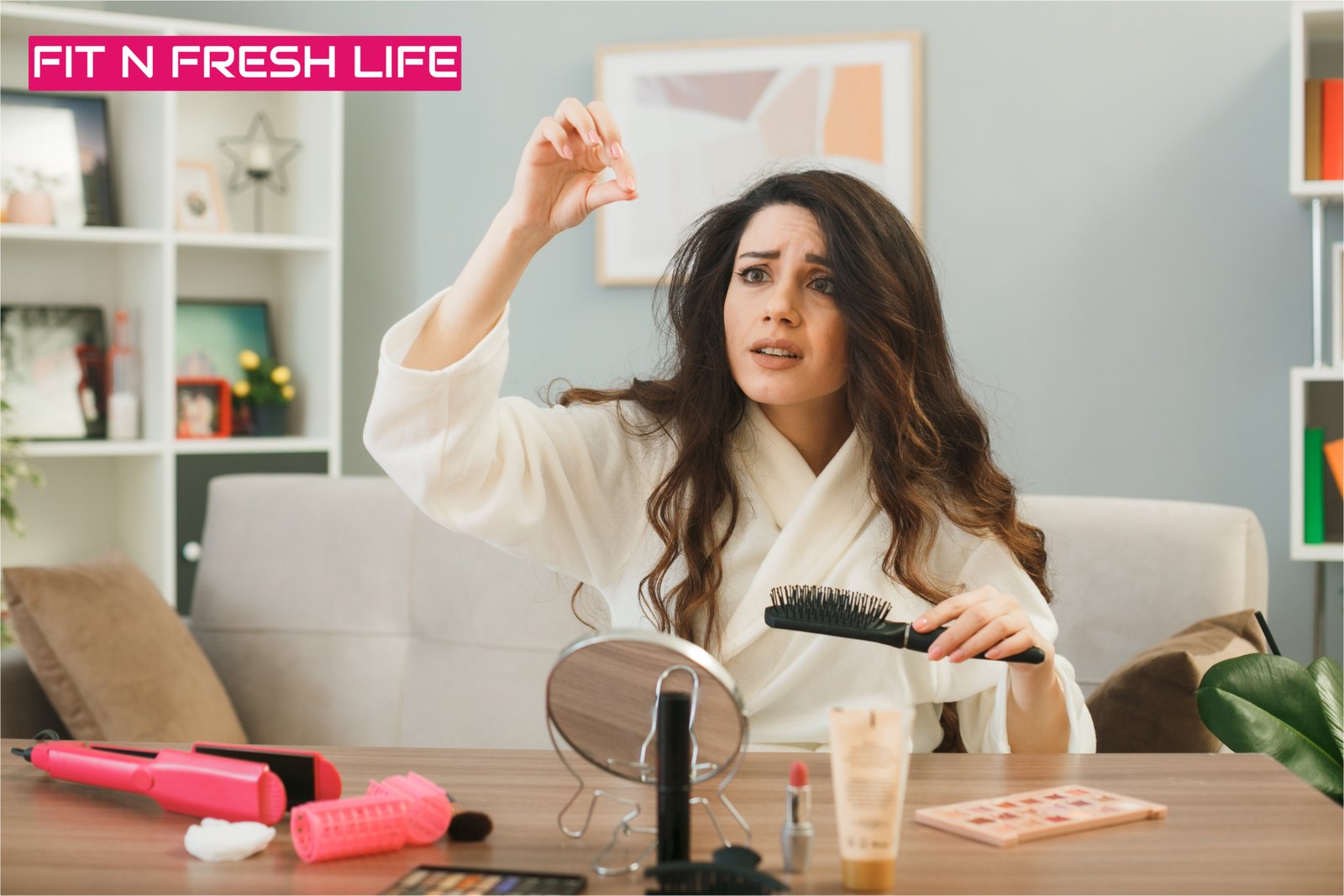
You wash your hair, apply conditioner, rinse it out, and expect that soft, smooth feeling.
But sometimes that just doesn't happen.
Your hair still feels rough. The ends look dry. It gets tangled easily. Maybe it even looks frizzy again a few hours after washing.
So what is going on?
It is easy to assume that your conditioner simply isn't good enough. But dry-looking hair is not always a conditioner problem. Your washing habits, heat styling, chemical treatments, how you handle wet hair, and even using a product that doesn't suit your hair type can all play a role.
If your hair constantly feels dry despite using conditioner, your routine may need a few small changes rather than another expensive product.
First, Conditioner Isn't Meant to “Repair” Everything
Conditioner can make hair feel smoother, easier to detangle, and more manageable, but it cannot magically reverse every type of damage.
Hair that has been repeatedly exposed to high heat, bleaching, coloring, chemical treatments, or rough handling can become fragile and break more easily. Conditioning can improve the feel and manageability of the hair, but damaged strands still need gentler treatment.
Think of conditioner as part of protecting and managing your hair—not as a reset button.
1. You May Be Washing Your Hair Too Aggressively
How you shampoo matters.
One common mistake is working shampoo aggressively through the entire length of the hair. The main job of shampoo is to clean your scalp and remove oil, sweat, dead skin, and product buildup.
Instead of vigorously rubbing shampoo into the lengths of your hair, focus the shampoo mainly on your scalp and allow the product to rinse through the rest of your hair.
This can help avoid unnecessary drying and friction, particularly if your hair is already dry, curly, textured, or chemically treated.
The American Academy of Dermatology recommends concentrating shampoo on the scalp rather than rubbing it through the entire length of the hair.
2. Your Conditioner Might Not Match Your Hair
Not every conditioner is designed for every type of hair.
Fine, straight hair may become weighed down by a rich product, while thick, curly, or very dry hair may need more conditioning to feel manageable.
If your hair is fine and looks greasy or flat after conditioning, you may be using more product than necessary or applying it too close to the scalp.
If your hair is thick, curly, dry, or prone to tangling, applying conditioner through more of the hair length may make more sense.
The AAD recommends choosing hair-care products according to your hair type and notes that dry or curly hair may need conditioner throughout the hair, while fine or straight hair often benefits from focusing conditioner on the ends.
3. You're Using Too Much Heat
Your conditioner may be doing its job, but your styling routine could be working against it.
Frequent blow-drying, straightening, curling, or other high-heat styling can contribute to dry, brittle, frizzy-looking hair.
Heat does not have to disappear from your life completely. But using it less often and choosing lower heat settings can reduce unnecessary stress on your hair.
When possible, let your hair partially air-dry before using a styling tool. If you do use heat, follow the instructions for a suitable heat-protective product and avoid keeping a hot tool on one section of hair for too long.
Dermatologists recommend limiting excessive heat and using low or medium settings when heat styling.
4. Your Hair May Be Getting Damaged After the Shower
Hair is more vulnerable when it is wet, so what you do after washing matters too.
Rubbing your hair aggressively with a towel can create friction. Pulling a brush through tangled wet hair can also lead to breakage.
Instead, gently wrap your hair in a towel or soft T-shirt to absorb excess water rather than rubbing it vigorously.
For straight hair, letting it dry somewhat before gently combing can help. For tightly curled or textured hair, detangling while damp and using a wide-tooth comb may be more appropriate.
The AAD recommends handling wet hair gently and adjusting detangling techniques according to hair texture.
5. You May Be Overdoing Hair Treatments
Hair color, bleach, chemical straightening, relaxing, and perming can change the structure of the hair and contribute to dryness and brittleness.
If you regularly color your hair and also use hot styling tools, your hair may be dealing with several sources of stress at the same time.
That doesn't mean you can never color or style your hair. It simply means that heavily processed hair may need a gentler routine.
Give your hair time between chemical treatments when possible, condition regularly, and avoid combining several aggressive treatments too close together.
The AAD notes that coloring and chemical treatments can damage hair and recommends steps such as increasing the time between treatments and using conditioner after shampooing.
6. You Might Be Applying Conditioner in the Wrong Place
More conditioner does not automatically mean softer hair.
For many people, conditioner works best where the hair actually needs it—usually from the mid-lengths toward the ends.
If you have fine hair, putting a heavy amount of conditioner directly on the scalp can leave your roots looking flat or greasy. On the other hand, if your ends are extremely dry, applying conditioner only to the very tips may not provide enough coverage.
Finding the right amount is partly about paying attention to your hair.
If your hair feels heavy and coated afterward, use less. If the lengths remain rough and difficult to detangle, you may need better coverage or a conditioner designed for your hair type.
7. Product Buildup Could Be Making Your Hair Feel Strange
Sometimes hair feels dry when what you are actually noticing is buildup.
Conditioners, styling creams, oils, gels, sprays, dry shampoos, and other products can accumulate over time.
The result can be confusing. Your hair may feel coated, heavy, dull, or difficult to style, even though you are trying to moisturize it.
If you use many styling products, consider whether your normal washing routine is effectively removing them. You don't necessarily need an aggressive cleansing routine every day. The right approach depends on your scalp, hair type, and the products you use.
If your hair suddenly feels very different after introducing a new product, that product may also be worth reconsidering.
8. Your Hair Might Be Dry Because of the Environment
Your surroundings can influence how your hair looks and feels.
Dry air can leave hair feeling rougher, while humidity can make some types of hair appear frizzier. Sun exposure, swimming, and frequent exposure to chlorinated pool water can also affect the feel of your hair.
Swimming is a good example. Chlorine can be drying to hair, particularly when you spend a lot of time in the pool. Rinsing your hair after swimming and using appropriate conditioning can help reduce the impact.
A recent Cleveland Clinic dermatologist also recommended wetting hair before entering a chlorinated pool and rinsing immediately afterward as ways to reduce dryness.
So, How Should You Actually Condition Your Hair?
There is no single routine that works perfectly for everyone, but a simple approach can help.
Start by choosing a conditioner made for your hair type. After shampooing, apply enough conditioner to coat the areas that tend to become dry or tangled.
For many people, that means focusing on the lengths and ends rather than the scalp.
Give the product enough time to work according to its instructions, then rinse thoroughly.
After your shower, handle your hair gently. Avoid aggressively rubbing it dry and be careful when detangling.
If your hair remains dry or frizzy, a small amount of a suitable leave-in conditioner may be useful, particularly for long, curly, dry, brittle, or heat-styled hair. Dermatologists note that leave-in conditioners can improve manageability and reduce frizz and breakage when used appropriately.
A Better Hair-Washing Routine
Before washing: Gently detangle your hair if needed.
In the shower: Concentrate shampoo on your scalp instead of aggressively scrubbing the lengths.
Condition: Apply conditioner where your hair needs it, paying particular attention to dry or tangled areas.
After washing: Gently remove excess water instead of rubbing your hair with a towel.
Styling: Reduce unnecessary heat and use lower settings when possible.
Between washes: Avoid constantly brushing, pulling, or manipulating your hair.
What About Hair Oils?
Hair oils are popular for a reason: they can make hair feel smoother and reduce the appearance of frizz.
But an oil is not necessarily the same thing as adding water or moisture to the hair.
Depending on the product, an oil can help coat the hair and reduce friction or make the strands feel softer. But using a large amount can also leave hair heavy or greasy.
If you want to experiment with an oil, start with a very small amount and apply it mainly where your hair feels dry. You can always add more later.
What If Your Hair Is Dry Only at the Ends?
This is extremely common.
The ends are the oldest part of your hair, so they have generally experienced more washing, brushing, sunlight, heat, and styling over time.
If your roots look healthy but your ends are rough, tangled, or splitting, concentrate your conditioning and gentle handling on the lengths and ends.
Regular trimming can also help manage visibly split ends, but no product can permanently fuse a split end back together.
If the ends continue to break despite changing your routine, it may be worth discussing the problem with a dermatologist or qualified hair professional.
Don't Confuse Dry Hair With Hair Loss
Dryness and hair loss are not the same thing.
Dry or damaged hair can break, which may make your hair appear thinner or shorter. Actual hair loss, however, can have many different causes that are unrelated to the conditioner sitting in your bathroom.
If you are experiencing significant shedding, noticeable thinning, bald patches, scalp changes, or persistent hair problems, don't assume that changing shampoo or conditioner will solve the underlying issue.
A dermatologist can help determine whether the problem is hair damage, a scalp condition, hair loss, or something else.
When It's Time to Rethink Your Routine
If your hair feels dry once in a while, you probably don't need to completely replace every product you own.
Start with the basics.
Reduce excessive heat. Be gentler when your hair is wet. Stop aggressively rubbing shampoo through the lengths. Make sure your conditioner matches your hair type. Pay attention to chemical treatments and styling habits.
Then give your routine some time.
Changing five things at once makes it difficult to know what actually helped.
Small Changes Can Make Hair Easier to Manage
Healthy-looking hair doesn't necessarily require a shelf full of products.
In many cases, the boring basics matter more than constantly buying something new.
Wash your scalp appropriately, condition your hair, handle it gently, limit unnecessary heat, and avoid hairstyles or treatments that repeatedly stress the strands.
If your hair is curly, textured, fine, thick, color-treated, or otherwise different from someone else's, your routine may need to look different too.
Quick Hair Check
- Does your shampoo mainly target your scalp?
- Are you using conditioner suited to your hair type?
- Are you putting conditioner where your hair actually feels dry?
- Do you frequently use straighteners, curling irons, or high heat?
- Do you rub your hair aggressively with a towel?
- Do you pull through tangles instead of gently detangling?
- Have you recently colored, bleached, straightened, or chemically treated your hair?
- Could your styling products be building up?
- Does your hair become noticeably different after swimming?
- Are you experiencing actual hair loss rather than simply dryness or breakage?
Final Thoughts
If your hair still feels dry after conditioner, don't automatically assume you need a stronger conditioner.
Sometimes the real issue is everything happening before and after the conditioner: aggressive washing, too much heat, chemical treatments, rough towel drying, excessive brushing, product buildup, or simply using a product that doesn't suit your hair.
Start by simplifying your routine and paying attention to what your hair is actually telling you.
Softer, more manageable hair often comes from fewer damaging habits rather than adding another ten products to your bathroom shelf.
And if your hair continues to break, thin, or change despite improving your routine, it is worth getting professional advice instead of continuing to experiment on your own.
Beauty Disclaimer: This article is for general informational purposes only and is not a substitute for professional medical or dermatological advice. Hair dryness, breakage, scalp problems, and hair loss can have different causes. If you experience persistent hair loss, significant breakage, scalp pain, inflammation, unusual changes, or other concerning symptoms, consult a qualified dermatologist or healthcare professional.