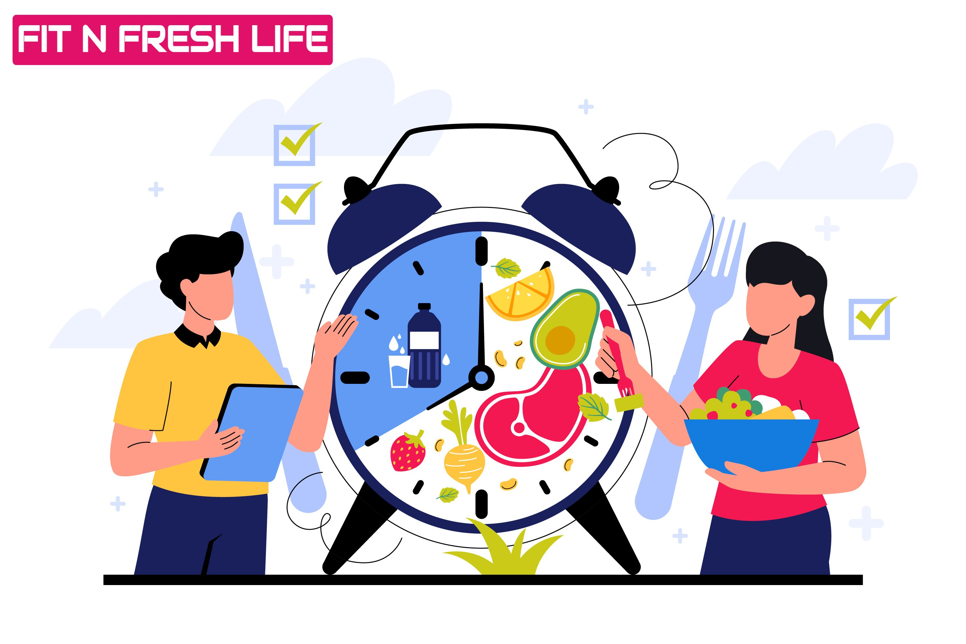
You probably think of time as something that exists outside your body. Your alarm tells you when to wake up, your calendar tells you when to work, and the clock on your phone tells you when it is time for dinner.
But your body has its own sense of time.
Inside you is a biological timing system that helps coordinate when you feel awake, when you become sleepy, when your body temperature changes, and when many other processes become more active or less active. This system is commonly referred to as your circadian rhythm or internal body clock.
It does not operate like a simple alarm clock that rings at exactly 7:00 every morning. Instead, it works as a constantly adjusting biological system that responds to signals from your environment and your daily behavior.
Light and darkness are among its strongest signals. But your eating schedule, physical activity, sleep pattern and other daily routines can also provide information about where your body is in the day.
The problem is that modern life can send your body mixed messages.
You might wake up at different times every day, spend the first few hours indoors, eat dinner late at night, work under bright artificial lighting until midnight, sleep in on weekends and then expect your body to immediately return to an early weekday schedule.
Nothing about this necessarily means that something is medically wrong with you. Life is unpredictable, and occasional changes are normal.
But when irregular schedules become your normal routine, your sleep-wake cycle can become harder to manage.
Understanding your body clock can help explain why when you sleep, eat, move and experience light may matter alongside what you do.
What Exactly Is Your Body Clock?
Your circadian rhythm is a roughly 24-hour cycle that helps coordinate many functions throughout the body. The central clock in the brain receives information about the light-dark cycle and helps synchronize the timing of other processes. Circadian clocks also exist in tissues and organs throughout the body.
Think of it less like one clock and more like a team of clocks that are designed to work together.
During the day, your body generally receives signals associated with being awake and active. As evening arrives and light decreases, biological signals begin shifting toward nighttime. Melatonin, a hormone associated with sleep timing, normally rises in the evening as darkness increases.
This is one reason your body can begin feeling sleepy around a familiar time even before you consciously decide that you are tired.
Your internal clock does not work alone, however. Another process called sleep pressure also builds while you remain awake. The interaction between your body clock and this accumulating sleep pressure helps determine when you feel alert and when you feel ready for sleep.
That is why staying awake until 3 a.m. one night does not simply mean you can sleep until noon the next day without consequences. Your sleep timing, light exposure and accumulated sleep pressure are all interacting.
Light Is One of the Strongest Signals Your Body Receives
If there is one environmental signal that deserves special attention when discussing your body clock, it is light.
Your eyes provide information to the brain about whether it is daytime or nighttime. Natural daylight helps synchronize the internal clock with the outside world. Darkness, meanwhile, supports the biological transition toward sleep.
This creates an interesting problem in modern life.
Humans can now experience bright artificial light at almost any hour.
You can wake up in a dark room, spend the entire morning indoors, work under artificial lighting all afternoon and then sit in front of a bright television or phone late at night.
Your calendar may say it is nighttime, but your environment may not be providing the same signals that your body historically associated with nighttime.
This does not mean you need to live without electricity or stop using your phone. It simply shows why the timing and intensity of light can matter.
NIH guidance on circadian rhythm disorders notes that light is the strongest environmental signal for resetting the sleep-wake cycle and that exposure to more light during the day and less artificial light at night can support alignment.
What Happens When Your Sleep Schedule Keeps Moving?
Your body generally likes predictable signals.
Imagine someone who wakes at 6:30 a.m. on weekdays, goes to bed around 11 p.m., and follows roughly the same pattern most days.
Then every Friday and Saturday, they stay awake until 3 a.m. and sleep until noon.
On Sunday night, they suddenly expect themselves to fall asleep at 11 p.m. because Monday morning requires an early start.
The problem is not that sleeping late on one weekend is automatically harmful. The difficulty is that the body is being asked to repeatedly switch between two different schedules.
This pattern is sometimes described as social jet lag—a mismatch between the timing your body follows naturally or socially and the schedule imposed by work, school or other responsibilities.
Large differences between weekday and weekend schedules can make it harder to maintain a stable sleep routine.
That is why consistency can be useful. The CDC recommends maintaining a regular sleep schedule, including on weekends, and getting enough sleep for your age. Most adults need at least seven hours per night.
Why Your Morning Matters More Than You Think
Many people think about sleep only at night.
They ask, “What can I do before bed to fall asleep faster?”
But your nighttime sleep is also influenced by what happens earlier in the day.
Morning light is particularly useful because it gives your biological clock a strong signal that a new day has begun. Spending some time outside in natural daylight can therefore be a practical way to reinforce the difference between daytime and nighttime.
The CDC specifically recommends getting natural light earlier in the day and suggests activities such as a morning or lunchtime walk.
This does not mean you need to stare directly at the sun. Normal outdoor daylight is enough to provide a much stronger environmental signal than spending the entire morning in a dim indoor room.
Even a short walk outside, having breakfast near a bright window, or simply spending part of your morning outdoors can make your daytime environment more clearly different from your nighttime environment.
Late-Night Light Can Send the Opposite Message
Now consider the opposite situation.
You finish work at 10 p.m., turn on bright lights, watch videos on your phone in bed and keep the television playing while you try to fall asleep.
Your brain is receiving multiple signals at once.
The clock says it is late. Your body may be tired. But your environment is still providing artificial light and stimulating information.
Bright artificial light late in the evening can interfere with the normal rise in melatonin and make it harder for some people to fall asleep.
This is one reason a calmer, dimmer environment before bed can be useful.
You do not need to create a perfectly dark lifestyle after sunset. Instead, think about gradually reducing the intensity of your environment as bedtime approaches.
Dim the lights. Reduce unnecessary notifications. Move stimulating activities away from the bed. Give your brain a clearer transition between “active daytime” and “sleep time.”
Then There Is Food: Does Meal Timing Matter?
Food is more complicated than simply labeling certain hours as “good” or “bad” for eating.
Your body processes nutrients throughout the day, and overall dietary quality remains extremely important. But researchers are increasingly studying chrononutrition, which looks at the relationship between food timing, circadian rhythms and metabolism.
Researchers have found evidence that meal timing can interact with the body's biological rhythms, although the science is still developing and there is no universal eating schedule that works for everyone.
One particularly interesting area is nighttime eating in people who work night shifts.
In a small controlled NIH-funded study, participants experiencing simulated night-shift conditions had higher glucose levels when eating during the nighttime compared with participants who ate during the daytime. The researchers emphasized that more research is needed, but the findings demonstrate how meal timing can interact with circadian alignment.
This does not mean that eating dinner after a particular hour is automatically unhealthy.
Human schedules vary. Some people work nights. Some have late shifts. Some exercise in the evening. Some have family responsibilities that make early meals unrealistic.
The more useful lesson is that your eating schedule is another part of your overall daily rhythm.
Why Eating at Random Times Can Make Your Routine Feel Disorganized
Consider two people.
The first eats breakfast around the same time most mornings, has lunch during the day, eats dinner at a relatively consistent time and avoids regularly turning midnight into a second dinner.
The second person sometimes skips breakfast, eats lunch at 4 p.m., has dinner at 10 p.m., snacks throughout the night and then wakes up late the following morning.
The food choices of these two people could actually be very similar.
Yet their daily rhythms are completely different.
Meal timing is not more important than nutritional quality, but it can be one of the signals your body receives about the structure of the day.
This is especially relevant for people whose sleep and work schedules are already irregular.
Exercise Is Another Time Signal
Physical activity does more than challenge your muscles and cardiovascular system.
It also becomes part of your daily pattern.
Regular daytime activity can reinforce the distinction between active and inactive parts of the day. Exercise is generally beneficial for overall health, but the timing can matter for sleep in some people.
NHLBI guidance notes that regular physical activity can support sleep routines, while exercising very close to bedtime may make it harder for some people to fall asleep.
That does not mean evening exercise is automatically a problem.
If you regularly exercise at night and sleep well, there may be no reason to change your routine simply because someone else says workouts must happen in the morning.
Instead, pay attention to your own response.
If intense late-night workouts leave you feeling energized when you need to sleep, moving them earlier may be worth experimenting with. If evening exercise helps you relax and does not interfere with sleep, it may fit perfectly into your schedule.
The Weekend Problem: When Your Body Gets Two Different Schedules
One of the easiest ways to disrupt a routine is to treat weekends as a completely different biological week.
Sleeping an extra hour or two occasionally is normal. After a demanding week, your body may genuinely need more sleep.
The bigger issue is creating a huge difference between weekday and weekend timing every single week.
For example:
- Monday–Friday: wake at 6:30 a.m.
- Saturday–Sunday: wake at 11:30 a.m.
- Weekday bedtime: around 11 p.m.
- Weekend bedtime: around 3 a.m.
That schedule effectively asks your body to change time zones every weekend and then reverse the change every Sunday night.
A more stable approach is to keep your sleep and wake times reasonably close across the week while still allowing some flexibility.
Shift Workers Have a Different Challenge
Not everyone can simply choose a regular daytime schedule.
Nurses, security workers, emergency personnel, factory workers, drivers and many other people may work through the night or rotate between shifts.
For these people, the issue is not a lack of discipline. Their work schedule can directly conflict with the natural light-dark cycle.
Night-shift work can create circadian misalignment because people are awake and eating at times when the body would normally be preparing for sleep.
Research into shift work has found that the timing of light, sleep and meals can influence how the body responds to the unusual schedule. NIH research, for example, has investigated whether keeping meals during the biological daytime could reduce some metabolic effects of simulated night work.
If you work shifts, the best routine may therefore look different from a standard 9-to-5 schedule.
The important principle is to make your sleep environment as consistent as possible, manage light exposure strategically and maintain regular routines where your schedule allows.
People with persistent difficulty adapting to shift work may benefit from discussing their sleep pattern with a healthcare professional.
What About People Who Are Naturally “Night Owls”?
Not everyone feels sleepy at exactly the same time.
Some people naturally prefer earlier schedules, while others tend to become alert later in the evening.
Your biological clock is influenced by genetics, age, environment and behavior, so there is no single bedtime that is biologically perfect for every person.
The important distinction is between having a later natural preference and having a constantly changing schedule.
A person who naturally becomes sleepy at midnight and wakes around 8 a.m. may have a stable rhythm.
Another person who sleeps at 10 p.m. one night, 2 a.m. the next, 5 a.m. on Friday and noon on Sunday has a much less predictable pattern.
Consistency matters even when the schedule itself is later than average.
Signs Your Routine May Need Attention
Your body clock is not something you need to obsessively monitor.
However, certain patterns can tell you that your current schedule may not be working well for you.
You may notice that:
- You regularly struggle to fall asleep even when you are tired.
- You wake at dramatically different times depending on the day.
- You need large amounts of caffeine just to feel functional in the morning.
- You feel unusually sleepy during the day.
- You regularly sleep much later on days off.
- You feel wide awake late at night but exhausted when you need to wake up.
- Your meals and sleep times constantly shift because there is no predictable daily routine.
None of these signs automatically means you have a circadian rhythm disorder. Stress, insufficient sleep, medications, medical conditions, anxiety, depression, sleep apnea and many other factors can affect sleep and daytime energy.
But persistent problems are worth discussing with a healthcare professional rather than assuming you simply need more willpower.
How to Give Your Body Clearer Signals
You do not need to completely redesign your life to support your circadian rhythm.
Start by making the major signals of your day more predictable.
Wake at a reasonably consistent time. Your wake time is one of the strongest anchors of your daily schedule.
Get daylight during the morning. Outdoor light can help reinforce the difference between day and night.
Keep evenings calmer. Gradually reduce bright light and highly stimulating activities as bedtime approaches.
Give meals some structure. You do not need to follow a rigid eating window, but avoiding a completely random eating schedule can make your day more predictable.
Move during the day. Regular physical activity supports overall health and can be part of a consistent daily rhythm.
Protect your sleep environment. A cool, quiet and dark bedroom can make it easier to maintain a sleep routine.
Watch caffeine timing. Caffeine can interfere with sleep in some people, particularly when consumed later in the day. NHLBI recommends limiting caffeine close to bedtime when managing circadian or sleep problems.
Do not try to fix everything overnight. If your bedtime has gradually moved from 11 p.m. to 3 a.m., suddenly forcing yourself into bed at 9 p.m. may simply leave you awake and frustrated.
Instead, work toward a more stable pattern and allow your body time to adapt.
A Simple Example of a More Predictable Day
There is no requirement to copy someone else's schedule exactly. But a day with reasonably consistent signals might look something like this:
You wake at roughly the same time, open the curtains and get some natural daylight. You eat breakfast or your first meal according to your normal routine. You remain physically active during the day and spend at least some time outside. Your meals happen at reasonably predictable times rather than randomly throughout the night.
As evening approaches, you reduce unnecessary stimulation and gradually make your environment darker and calmer. You go to bed at a time that allows enough sleep and repeat the pattern the following day.
The point is not perfection.
The point is predictability.
Your Body Clock Is Not a Wellness Trend
It is easy to turn circadian health into another internet trend with rigid rules such as “never eat after 7 p.m.” or “you must wake at 5 a.m. to be healthy.”
Real biology is more complicated.
Research into meal timing, light exposure, sleep schedules and circadian rhythms is still developing. Different people have different work schedules, chronotypes, health conditions and responsibilities.
There is also a major difference between supporting a healthy routine and trying to manipulate every biological process in your body.
You do not need to monitor every meal to the minute.
You do not need to wake before sunrise.
You do not need to eliminate every screen at night.
And you do not need to panic if your schedule changes occasionally.
A healthier approach is to understand the signals your body receives and make the most important ones more consistent whenever practical.
The Bigger Picture
Your body does not experience sleep, food, exercise and daily routines as completely separate subjects.
They interact.
Light helps establish the day-night pattern. Sleep follows a combination of circadian timing and accumulated sleep pressure. Meals provide additional timing information. Physical activity becomes part of your daily rhythm. Your environment, work schedule and social life can either reinforce or disrupt these patterns.
That is why improving your sleep is not always about finding a magical bedtime routine.
Sometimes the better starting point is looking at the entire day.
Ask yourself:
When do I wake up? When do I see daylight? When do I eat? When am I physically active? When do I start slowing down? When do I expose myself to bright light? When do I actually give my brain a chance to rest?
You may discover that the problem you thought was “bad sleep” is actually a much bigger pattern of inconsistent signals throughout the day.
And once you see the pattern, you can start changing it one signal at a time.
Final Thoughts
Your internal body clock is quietly working whether you pay attention to it or not.
You cannot control every part of it, and you certainly cannot make your biology perfectly match a schedule every day.
But you can give your body clearer information.
Regular sleep and wake times, appropriate daylight exposure, sensible meal timing, daytime activity and a calmer evening environment can all help create a more predictable daily rhythm.
The goal is not to live according to a strict biological timetable.
It is simply to stop making your body guess what time of day it is.
Small changes can make your routine more coherent, and a coherent routine can make it easier to understand what your body actually needs.
Disclaimer: This article is for general educational purposes and is not a substitute for professional medical advice, diagnosis or treatment. Persistent sleep problems, severe daytime sleepiness, major changes in your sleep pattern, or symptoms that interfere with daily life should be discussed with a qualified healthcare professional.